Why Webflow Is Becoming the Preferred Website Builder for Modern Businesses

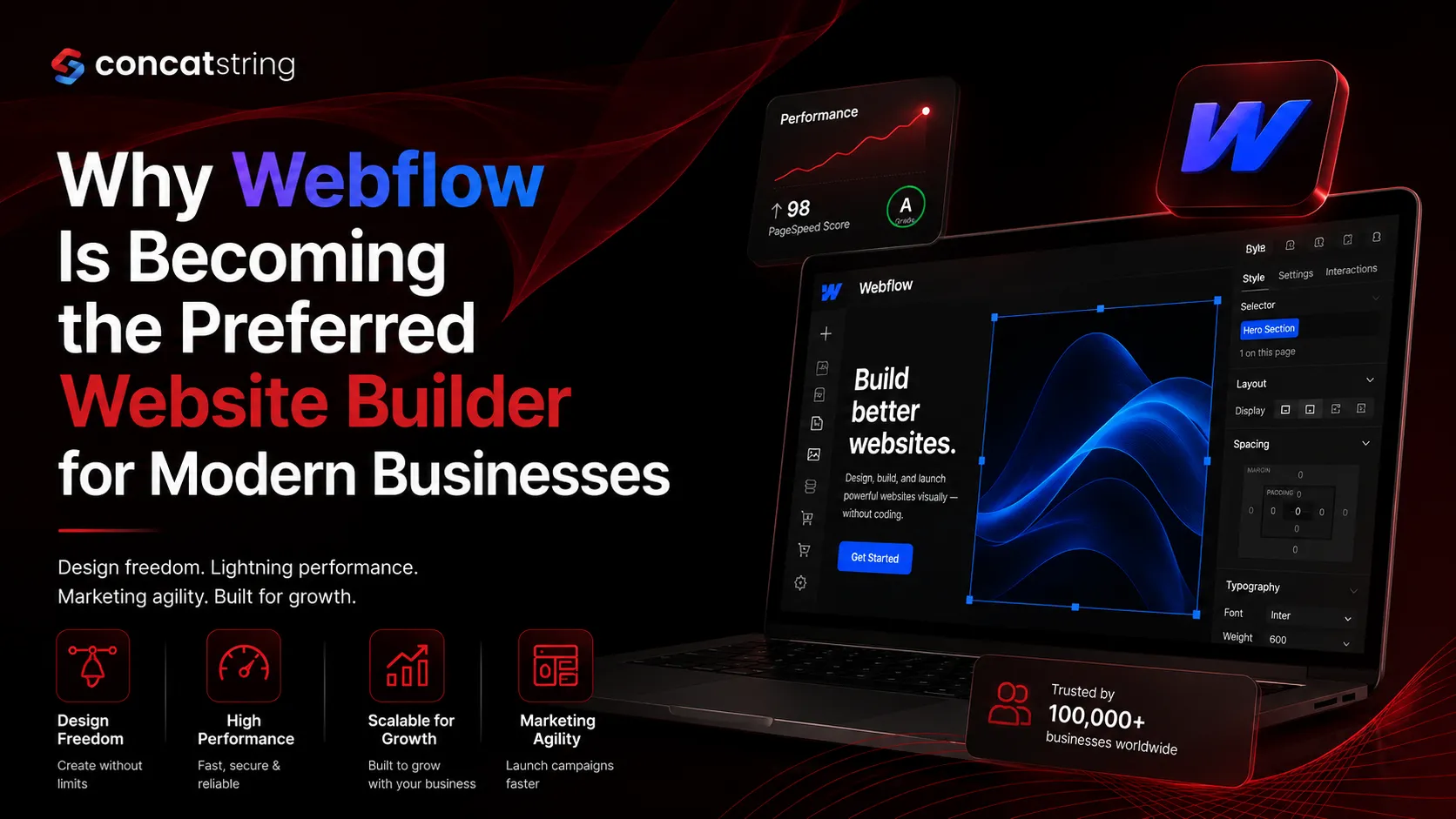
The way businesses build and manage websites is changing rapidly. As digital competition increases, organizations need websites that are faster to launch, easier to manage, and capable of supporting long-term growth. At the same time, the global low-code and no-code market is projected to exceed $65 billion by 2027, underscoring growing demand for agile website development solutions. Against this backdrop, Webflow has emerged as one of the most attractive platforms for businesses seeking design flexibility, strong performance, and marketing independence. The rise of Webflow for modern business reflects a broader shift toward smarter, more scalable ways of building digital experiences.
Table of Contents
Use AI to summarize this article
The Evolution of Business Websites
A decade ago, a business website primarily served as an online brochure. Today, it plays a much larger role. It acts as a sales representative, marketing channel, customer support hub, and brand experience platform all at once.
As customer expectations continue to rise, businesses can no longer afford slow websites, outdated designs, or cumbersome content management systems. Traditional website development often involves multiple stakeholders, lengthy timelines, and ongoing maintenance challenges. Even simple content updates may require developer involvement, creating delays that impact marketing performance.
Modern organizations need flexibility. They need the ability to launch campaigns quickly, update content effortlessly, and adapt their digital presence as market conditions change. This demand is one of the primary reasons why Webflow has gained significant traction across industries.
What Makes Webflow Different?
Webflow occupies a unique position in the website development landscape. Unlike traditional website builders that rely heavily on templates and design limitations, Webflow provides extensive creative freedom while still maintaining the simplicity of a visual development platform.
At its core, Webflow allows businesses to design, build, manage, and host websites from a single platform. What distinguishes it from many competitors is its ability to generate clean, production-ready code while providing a visual interface that designers and marketers alike can use.
This approach eliminates much of the disconnect that traditionally exists between design and development teams. Instead of translating design files into code through lengthy development cycles, teams can build and publish directly within the platform.
Why Modern Businesses Are Moving to Webflow
The increasing adoption of Webflow is not simply the result of industry trends. It stems from real business needs that many traditional platforms struggle to address effectively.
One of the most compelling advantages is design flexibility. Modern brands understand that differentiation matters. In crowded markets, businesses need websites that reflect their unique identity rather than looking like variations of the same template.
Webflow enables organizations to create highly customized digital experiences without sacrificing responsiveness or performance. This level of creative control helps brands establish stronger visual identities and deliver more engaging customer experiences.
Beyond design, speed has become a critical factor in business growth. Traditional website projects often require extensive collaboration between designers, developers, marketers, and project managers. While collaboration remains important, it can significantly slow execution.
Webflow reduces these bottlenecks by bringing design and development into a unified environment. As a result, businesses can move from concept to launch much faster, allowing them to respond quickly to market opportunities.
Research on no-code development platforms consistently highlights faster deployment and increased operational efficiency as key benefits driving adoption.
Marketing Teams Gain Greater Independence
One of the most significant shifts enabled by Webflow is the empowerment of marketing teams.
In many organizations, marketers depend heavily on developers to make website updates, create landing pages, or launch campaigns. This dependency often creates delays that reduce marketing agility and slow growth initiatives.
Webflow changes this dynamic by allowing marketers to manage content directly through an intuitive content management system. Teams can publish blogs, create campaign pages, update product information, and optimize website content without waiting for development resources.
This increased autonomy enables businesses to react more quickly to industry trends, customer feedback, and emerging opportunities. It also allows development teams to focus on more strategic initiatives rather than routine website updates.
For organizations focused on growth, this operational efficiency can create a significant competitive advantage.
SEO Benefits That Support Long-Term Growth
Search engine optimization remains one of the most effective channels for generating sustainable website traffic. Businesses investing in content marketing and organic search need platforms that support SEO best practices without introducing unnecessary complexity.
Webflow provides many essential SEO features out of the box. Businesses can customize meta titles and descriptions, create clean URL structures, generate XML sitemaps, implement schema markup, and manage redirects without relying on multiple plugins.
This streamlined approach reduces technical complexity while ensuring websites remain optimized for search engines.
Additionally, Webflow's clean code structure and performance-focused architecture contribute to better technical SEO outcomes. Since page speed and user experience play important roles in search rankings, these advantages can positively influence long-term visibility.
For businesses competing in increasingly crowded search results, these SEO capabilities are particularly valuable.
Performance Has Become a Business Requirement
Website performance is no longer just a technical consideration. It directly impacts customer experience, lead generation, and revenue.
Research from Google has repeatedly demonstrated that users expect fast-loading websites and are more likely to abandon pages that take too long to load. Even minor delays can reduce engagement and conversion rates.
Webflow addresses this challenge through optimized hosting infrastructure, global content delivery networks, and built-in performance enhancements. These features help businesses deliver faster user experiences without requiring extensive server management or technical expertise.
For organizations focused on digital growth, improved performance often translates into measurable business outcomes, including higher conversion rates and stronger customer retention.
Security Without the Maintenance Burden
Security remains a major concern for businesses operating online. Traditional content management systems often require ongoing plugin updates, security patches, and server maintenance to remain protected against vulnerabilities.
This maintenance burden can consume valuable resources and increase operational risk.
Webflow takes a different approach by providing managed hosting and infrastructure security as part of the platform. Businesses benefit from SSL certificates, automated updates, and enterprise-grade hosting environments without the need for extensive manual intervention.
As cyber threats continue to evolve, this simplified security model provides both peace of mind and operational efficiency.
Scalability for Growing Organizations
One common misconception is that visual development platforms are only suitable for small businesses. In reality, Webflow has evolved into a platform capable of supporting organizations at various stages of growth.
Startups appreciate the ability to launch quickly and iterate rapidly. SaaS companies leverage Webflow to build conversion-focused marketing websites. Agencies use the platform to create custom client experiences, while enterprise organizations benefit from advanced content management and collaboration features.
This scalability allows businesses to continue using Webflow as their needs evolve rather than migrating to new platforms every few years.
Industry adoption data further supports this trend, with hundreds of thousands of active websites operating on Webflow across multiple industries.
The Future of Webflow and Digital Experience Management
The growing popularity of Webflow reflects a broader movement toward visual development, automation, and AI-assisted workflows.
Businesses increasingly expect technology platforms to improve productivity while reducing operational complexity. Webflow has responded by investing heavily in AI-powered tools and workflow enhancements designed to accelerate website creation and content management.
As artificial intelligence becomes more integrated into marketing and digital operations, platforms that combine flexibility, performance, and automation are likely to become even more valuable.
Webflow's ongoing innovation positions it well within this evolving landscape.
Is Webflow the Right Choice for Your Business?
While Webflow offers substantial advantages, the ideal platform depends on your business objectives.
Organizations building highly complex web applications or requiring extensive backend functionality may still benefit from custom development solutions. However, for most marketing websites, corporate websites, service businesses, SaaS companies, and content-driven organizations, Webflow provides an exceptional balance of flexibility, scalability, and ease of management.
The growing adoption of Webflow is not simply about choosing a website builder. It is about embracing a more efficient and future-ready approach to digital growth.
Conclusion
The rise of Webflow for modern business represents a significant shift in how organizations approach website development. Businesses today need platforms that combine design freedom, operational efficiency, strong SEO capabilities, high performance, and simplified maintenance.
Webflow successfully brings these elements together within a single ecosystem, enabling companies to move faster and operate more effectively in an increasingly digital marketplace.
As customer expectations continue to evolve and competition intensifies, businesses that invest in agile, scalable web platforms will be better positioned for long-term success. For many organizations, Webflow is proving to be exactly that platform.
Build a Future-Ready Website with Concatstring
Your website should do more than look good, it should drive measurable business growth. At Concatstring, we help businesses leverage Webflow to create high-performing, SEO-friendly, and conversion-focused websites that support long-term success. Whether you're launching a new brand, redesigning an outdated website, or looking to improve your digital presence, our team can help you build a modern website that delivers real results.
FAQs

.png)
.png)