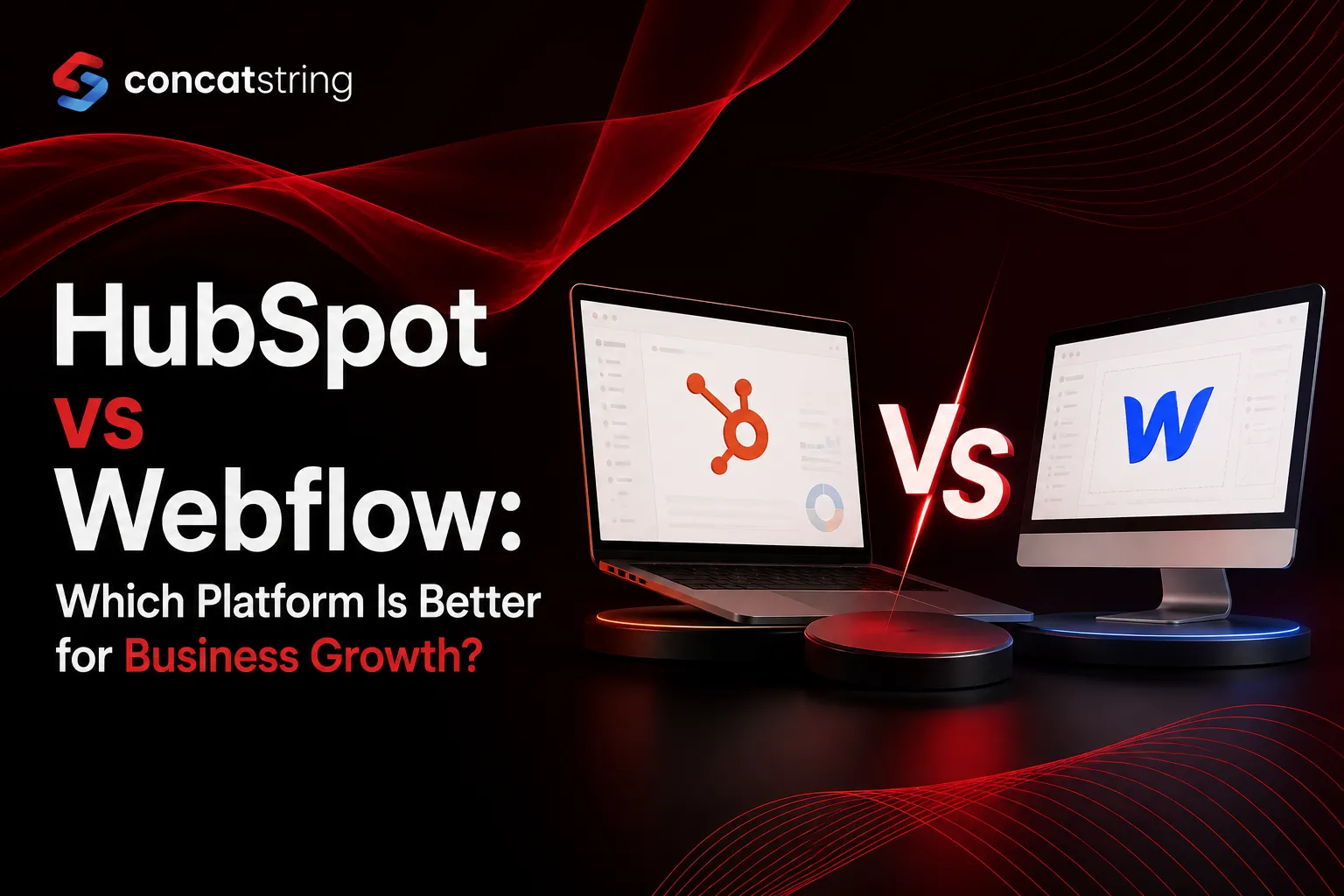
HubSpot vs Webflow: Which Platform Is Better for Business Growth?

As businesses continue investing in digital transformation, websites have evolved from simple online brochures into powerful revenue-generating assets. According to Webflow's State of the Website report, over 90% of marketing leaders consider their website one of the most important drivers of business growth. At the same time, companies are increasingly looking for platforms that not only attract visitors but also convert them into customers through personalized experiences and data-driven marketing. This is where the HubSpot vs Webflow debate becomes important. While both platforms help businesses build a strong digital presence, they approach growth from very different perspectives. Understanding these differences can help organizations choose the right platform to support long-term scalability, lead generation, and customer acquisition.
Table of Contents
Use AI to summarize this article
Understanding HubSpot and Webflow
Before comparing features and capabilities, it's important to understand what each platform was originally built to accomplish.
HubSpot is fundamentally a customer platform. While it includes a content management system and website-building capabilities, its primary purpose is helping businesses attract, nurture, and convert customers. The platform combines CRM, marketing automation, sales tools, customer service features, analytics, and content management into a single ecosystem. This unified approach allows companies to manage the entire customer journey from one place.
Webflow, on the other hand, began as a visual web development platform designed to bridge the gap between design and development. It enables businesses to build highly customized websites without extensive coding while maintaining professional-grade performance and flexibility. Over the years, Webflow has become a preferred choice for startups, SaaS companies, agencies, and marketing teams that prioritize design freedom and website agility.
The distinction is important because HubSpot focuses on managing customer relationships and business growth, whereas Webflow focuses on building exceptional digital experiences.
HubSpot vs Webflow: The Core Difference
The simplest way to understand the difference between HubSpot and Webflow is this:
HubSpot is a growth platform with website capabilities.
Webflow is a website platform with marketing integrations.
This fundamental difference influences how businesses use each platform and the outcomes they achieve.
HubSpot was built around the idea that every visitor interaction should contribute to a larger customer acquisition and retention strategy. Every website visit, form submission, email engagement, and sales conversation can be connected within a single database. This creates a complete picture of the customer journey and allows businesses to optimize marketing and sales performance more effectively.
Webflow takes a website-first approach. Its primary goal is helping businesses create visually impressive, highly customized websites that deliver exceptional user experiences. While integrations can extend its functionality, the platform itself remains focused on design, content management, and website performance.
As a result, companies looking for a centralized growth engine often lean toward HubSpot, while organizations seeking maximum design flexibility frequently prefer Webflow.
Website Design and User Experience
When it comes to website design, Webflow has earned a strong reputation for giving marketers and designers unprecedented creative freedom.
Unlike many traditional website builders that rely heavily on templates, Webflow allows teams to build custom layouts, animations, interactions, and responsive designs without compromising performance. Designers can create sophisticated digital experiences while maintaining control over how the website behaves across different devices.
This flexibility is one of the main reasons why many modern SaaS companies and high-growth startups choose Webflow. It enables faster iteration, easier collaboration between marketing and design teams, and a stronger ability to differentiate a brand online.
HubSpot also offers website-building functionality through its CMS Hub, but its priorities are different. Rather than emphasizing creative flexibility above everything else, HubSpot focuses on creating websites that support lead generation and customer conversion. Features such as smart content, personalized experiences, CRM-connected forms, and dynamic calls-to-action are designed to improve marketing effectiveness rather than visual experimentation.
For businesses where brand experience is a major competitive advantage, Webflow often provides greater creative possibilities. For organizations that prioritize conversion optimization and customer acquisition, HubSpot's approach may deliver stronger business outcomes.
CRM and Lead Management
One of the biggest advantages HubSpot brings to the table is its native CRM integration.
Modern businesses generate customer data from multiple channels, including websites, email campaigns, social media platforms, and sales conversations. Managing this information effectively can become challenging when different systems operate independently.
HubSpot solves this problem by placing CRM functionality at the center of its ecosystem. Every interaction a prospect has with your business can be tracked and connected to a unified contact profile. If a visitor downloads an ebook, revisits your website multiple times, opens marketing emails, and eventually schedules a demo, HubSpot records the entire journey automatically.
This level of visibility helps marketing and sales teams understand customer behavior, personalize outreach efforts, and make more informed decisions throughout the sales process.
Webflow does not include a native CRM of this scale. While it integrates effectively with HubSpot and other CRM platforms, businesses typically need additional tools and configuration to achieve the same level of customer tracking and relationship management.
For companies where lead generation and customer lifecycle visibility are critical growth drivers, HubSpot offers a significant advantage.
Marketing Automation Capabilities
Marketing automation has become an essential component of modern business growth. As customer journeys become more complex, businesses need systems that can engage prospects at the right time with the right message.
This is an area where HubSpot clearly stands out.
HubSpot enables businesses to create sophisticated automated workflows that guide prospects through the buying journey. Whether someone downloads a resource, fills out a contact form, visits a pricing page, or requests a demo, HubSpot can automatically trigger personalized follow-up actions.
These automated processes help businesses maintain consistent communication, improve lead nurturing, and increase conversion rates without requiring manual intervention.
Webflow does not provide the same level of native marketing automation. Instead, businesses often connect third-party platforms such as HubSpot, Mailchimp, ActiveCampaign, or Zapier to build automated workflows. While this approach can be effective, it often results in a more fragmented technology stack and additional management complexity.
For businesses seeking an all-in-one marketing ecosystem, HubSpot is generally the stronger choice.
SEO Performance
Search engine optimization remains one of the most sustainable channels for long-term business growth, making SEO capabilities an important consideration when comparing HubSpot vs Webflow.
The good news is that both platforms perform well from an SEO perspective.
Webflow is widely appreciated for its clean code structure, fast-loading pages, responsive design framework, and technical SEO flexibility. Developers and SEO specialists often value the level of control Webflow provides over website architecture and optimization elements.
HubSpot approaches SEO from a broader content marketing perspective. In addition to supporting technical SEO best practices, it includes built-in SEO recommendations, topic cluster tools, content optimization guidance, and performance reporting. These features help businesses create content strategies aligned with search intent and user behavior.
The better platform ultimately depends on your priorities. If technical flexibility is most important, Webflow may have the edge. If your strategy revolves around content marketing and inbound lead generation, HubSpot's integrated SEO capabilities can provide greater value.
Content Management and Blogging
Content plays a central role in attracting, educating, and converting potential customers. As a result, content management capabilities are often a deciding factor when selecting a platform.
HubSpot's content management system was built around inbound marketing principles. It helps businesses not only publish content but also measure how content contributes to lead generation and revenue growth. Features such as topic clusters, content attribution, SEO recommendations, and marketing automation create a comprehensive environment for content-driven growth.
Webflow offers a highly flexible content management system that allows businesses to create custom content structures and dynamic publishing experiences. This flexibility makes it particularly attractive for organizations with unique content requirements or strong design priorities.
Both platforms are capable blogging solutions, but their strengths differ. HubSpot focuses on marketing performance and business impact, while Webflow emphasizes content flexibility and presentation.
Scalability for Growing Businesses
As businesses grow, their technology requirements inevitably become more complex. The ideal platform should support expansion without creating unnecessary operational challenges.
HubSpot is particularly well-suited for organizations that need close alignment between marketing, sales, and customer success teams. Because all data exists within a shared ecosystem, businesses can scale operations while maintaining visibility across the entire customer lifecycle.
Webflow excels in situations where rapid website development and marketing agility are priorities. Growing companies can launch new pages, update designs, and create digital experiences quickly without relying heavily on developers.
The right choice depends largely on your growth model. Organizations focused on customer acquisition, retention, and revenue operations often benefit more from HubSpot. Businesses focused on brand differentiation, website innovation, and marketing agility frequently find Webflow to be a better fit.
Pricing Considerations
Pricing is another important factor when evaluating HubSpot vs Webflow.
Webflow generally offers a lower barrier to entry for businesses focused primarily on website creation. Companies can build sophisticated websites without investing in a comprehensive marketing platform.
HubSpot often requires a larger investment, particularly as businesses adopt additional hubs for marketing, sales, customer service, and operations. However, that investment can replace multiple standalone tools, potentially reducing overall software complexity and improving efficiency.
Instead of evaluating pricing solely on monthly subscription costs, businesses should consider the total cost of ownership, including integrations, maintenance, operational efficiency, and scalability.
Which Platform Is Better for Different Business Types?
The answer depends on your growth objectives.
Businesses that prioritize lead generation, customer relationship management, sales alignment, marketing automation, and revenue attribution often achieve better results with HubSpot.
Organizations that prioritize design flexibility, brand storytelling, website performance, and rapid deployment often find Webflow to be a stronger solution.
Many modern businesses are also adopting a hybrid approach. By combining Webflow's website capabilities with HubSpot's CRM and marketing automation tools, companies can leverage the strengths of both platforms while minimizing their individual limitations.
Final Verdict: HubSpot vs Webflow
The HubSpot vs Webflow debate does not have a universal winner because both platforms were designed to solve different business challenges.
HubSpot is ultimately the stronger choice for businesses seeking a unified growth platform that combines CRM, marketing automation, analytics, content management, and sales enablement. Its ability to connect every customer interaction within a single ecosystem makes it particularly valuable for organizations focused on lead generation and revenue growth.
Webflow shines when design flexibility, website performance, and digital experience are top priorities. Its visual development capabilities allow businesses to create modern, highly customized websites without sacrificing speed or scalability.
For many growing businesses, the most effective strategy may not be choosing one over the other. Instead, combining HubSpot's growth infrastructure with Webflow's design capabilities can create a powerful foundation for sustainable digital growth.
Build a Growth-Focused Digital Experience with Concatstring
Choosing between HubSpot and Webflow is not just a technology decision—it is a growth decision. The right platform can improve lead generation, streamline operations, enhance customer experiences, and support long-term scalability.
At Concatstring, we help businesses evaluate, implement, and optimize digital platforms that align with their growth objectives. Whether you need a high-converting HubSpot ecosystem, a visually compelling Webflow website, or an integrated solution that combines both platforms, our team can help you build a digital foundation designed for measurable business results.
Contact Concatstring today to discover the right platform strategy for your business.
FAQs

.png)
.png)