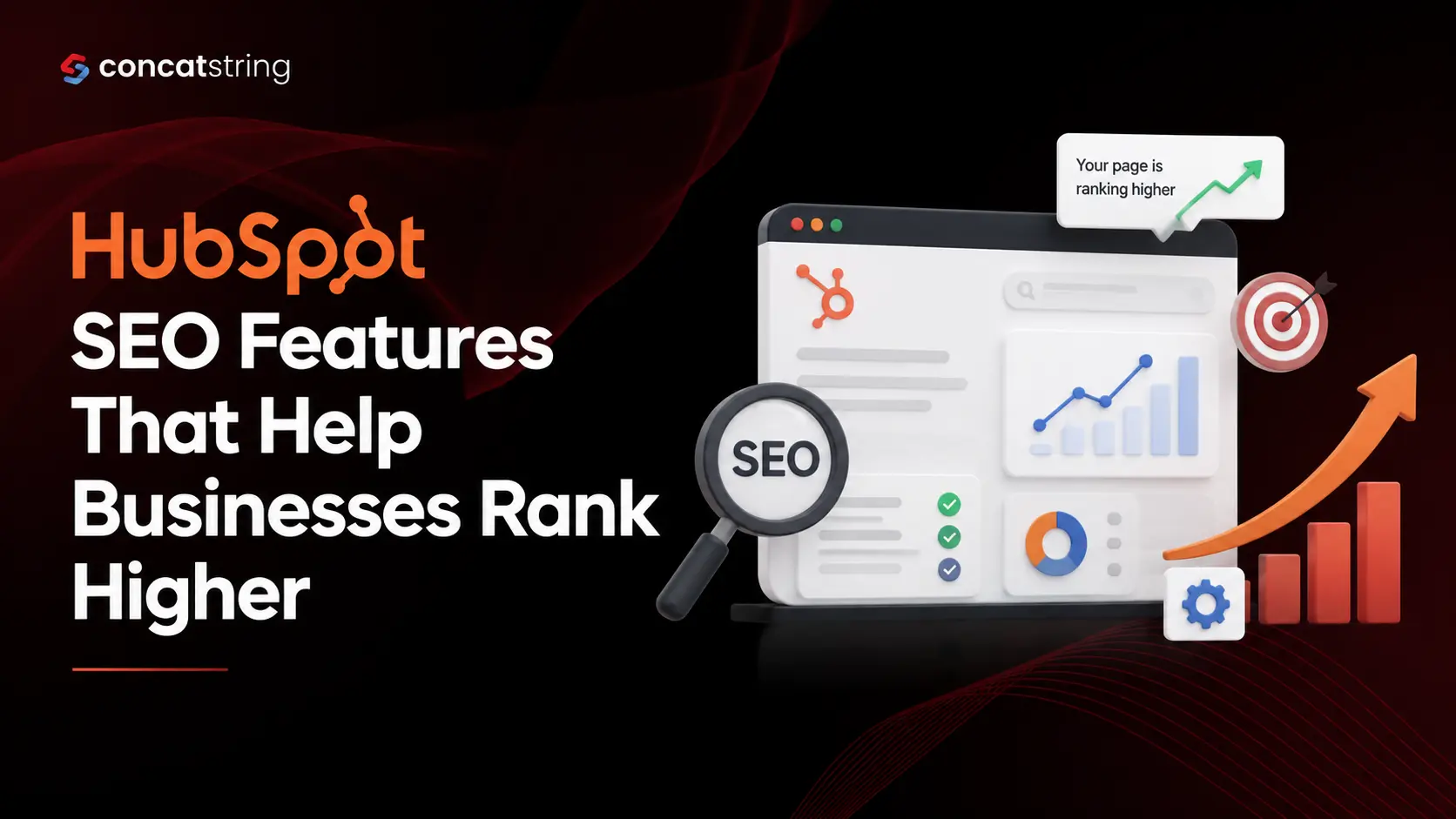
Search remains one of the most valuable customer acquisition channels, with 68% of online experiences beginning on a search engine. At the same time, businesses are competing in an increasingly crowded digital landscape where technical SEO, content quality, and user experience all influence rankings. HubSpot simplifies these challenges by combining SEO, content marketing, analytics, and CRM into one platform. Understanding HubSpot SEO Features can help businesses create optimized content, improve search visibility, and generate sustainable organic growth.
Table of Contents
Use AI to summarize this article
Why SEO Matters More Than Ever
SEO is no longer just about adding keywords to webpages. Modern search engines evaluate content quality, page experience, technical health, authority, and user intent before deciding where pages rank.
Google also continues to prioritize helpful, trustworthy content that answers users' questions comprehensively. Businesses that invest in structured SEO strategies consistently outperform those relying solely on paid advertising.
According to BrightEdge, organic search remains one of the largest drivers of website traffic, reinforcing why SEO should be a long-term business investment rather than a one-time task.
Source: https://ahrefs.com/blog/seo-statistics/
What Are HubSpot SEO Features?
HubSpot SEO Features are built-in optimization tools available within HubSpot's Content Hub and Marketing Hub. Instead of using multiple disconnected SEO plugins and third-party software, businesses can manage website optimization, blogging, keyword strategy, content performance, and technical recommendations from a single platform.
The platform is especially valuable for organizations that want marketing, sales, CRM, and SEO working together.
Top HubSpot SEO Features That Improve Rankings
1. SEO Recommendations
One of HubSpot's strongest capabilities is its automated SEO recommendation engine.
It continuously scans your website and highlights issues that may affect rankings, including:
- Missing meta descriptions
- Duplicate title tags
- Broken internal links
- Slow-loading pages
- Missing image alt text
- Mobile optimization opportunities
Rather than manually auditing every page, marketers receive prioritized recommendations that are easy to implement.
This helps maintain a technically healthy website without requiring advanced SEO expertise.
2. Topic Cluster Strategy
Traditional SEO often focused on targeting individual keywords.
HubSpot introduced the Topic Cluster framework, which organizes content around a central pillar page connected to supporting articles.
For example:
Pillar Page
- HubSpot SEO Features
Supporting articles might include:
- How HubSpot Improves Technical SEO
- HubSpot Content Strategy Guide
- HubSpot Blogging Best Practices
- HubSpot Keyword Research Tips
This structure helps search engines better understand topical authority while making navigation easier for users.
3. Built-in Content Optimization
As you write blog posts inside HubSpot, the platform provides live SEO recommendations.
Suggestions include:
- Keyword placement
- Heading optimization
- Internal linking
- Meta descriptions
- Readability improvements
- Image optimization
Instead of optimizing after publishing, writers can improve content before it goes live.
This workflow reduces errors and encourages SEO best practices across every article.
4. Content Strategy Tool
HubSpot's Content Strategy Tool helps marketers discover relationships between keywords and content topics.
Rather than producing isolated blog posts, businesses can create an interconnected content ecosystem that supports broader search visibility.
This approach improves:
- Topical authority
- Internal linking
- User engagement
- Crawl efficiency
5. Blog Optimization
HubSpot's blogging platform was designed with SEO in mind.
Useful capabilities include:
- Custom URLs
- Meta title editing
- Meta descriptions
- Canonical URLs
- Automatic XML sitemaps
- Clean page architecture
- Responsive templates
Because many technical SEO settings are handled automatically, marketers can spend more time creating valuable content.
6. Internal Linking Opportunities
Internal links help search engines understand page relationships while distributing authority across a website.
HubSpot makes internal linking easier by organizing related content through topic clusters and content management tools.
Proper internal linking also improves user navigation and increases average session duration.
7. Page Performance Analytics
SEO doesn't stop after publishing.
HubSpot provides detailed reporting for every page, including:
- Organic traffic
- Bounce rate
- Time on page
- Conversion performance
- Click-through rates
- Lead generation metrics
These insights allow marketers to identify high-performing content and improve underperforming pages.
8. Mobile Optimization
Google primarily indexes mobile versions of websites.
HubSpot themes are designed to be responsive, ensuring content performs well across desktop, tablet, and mobile devices.
Mobile-friendly websites typically experience:
- Better user engagement
- Lower bounce rates
- Improved search rankings
9. Secure Hosting
Website security influences user trust and search performance.
HubSpot includes:
- SSL certificates
- Managed hosting
- CDN support
- Automatic updates
- Security monitoring
These features improve both technical performance and user confidence.
10. XML Sitemap Generation
Search engines discover new pages faster when websites provide updated XML sitemaps.
HubSpot automatically creates and updates XML sitemaps whenever new content is published, reducing manual maintenance.
Benefits of Using HubSpot SEO Features
Businesses choosing HubSpot often experience advantages beyond technical SEO.
These include:
- Centralized marketing management
- Better collaboration between content and sales teams
- Faster content publishing
- Consistent optimization workflows
- Improved reporting
- Easier website maintenance
Instead of managing several disconnected tools, everything works together within one ecosystem.
How HubSpot Supports Content Marketing
SEO and content marketing are closely connected.
HubSpot combines blogging, email marketing, landing pages, forms, CRM, automation, and analytics into one platform.
This allows businesses to create content that not only ranks but also converts visitors into qualified leads.
HubSpot's marketing research also highlights blogging as one of the most widely used content formats for generating awareness and leads.
Source: https://www.hubspot.com/marketing-statistics?locale=en_GB
Common SEO Mistakes HubSpot Helps Prevent
Many businesses struggle with avoidable SEO issues.
HubSpot helps reduce problems such as:
- Duplicate metadata
- Missing alt text
- Weak internal linking
- Poor content organization
- Thin pages
- Broken links
- Technical crawl issues
Its recommendations make ongoing optimization part of the publishing process rather than an occasional audit.
Best Practices for Maximizing HubSpot SEO Features
To get the most from HubSpot, businesses should:
- Build topic clusters instead of isolated blog posts.
- Update older content regularly.
- Monitor SEO recommendations weekly.
- Improve internal linking across related pages.
- Optimize images and page speed.
- Track keyword performance over time.
- Publish high-quality, experience-based content consistently.
- Measure conversions, not just rankings, to evaluate SEO success.
These practices align with Google's emphasis on helpful, authoritative content and sustainable organic growth.
Why Businesses Choose HubSpot for SEO
HubSpot stands out because it connects SEO with the entire customer journey.
Instead of viewing SEO as a standalone activity, businesses can:
- Generate traffic
- Capture leads
- Nurture prospects
- Track customer interactions
- Measure revenue impact
This integration makes HubSpot particularly valuable for B2B companies, SaaS providers, agencies, and service businesses looking to align marketing with business outcomes.
Internal Linking Suggestions
- HubSpot Development Services
- HubSpot CMS Development
- Content Marketing Services
- Technical SEO Services
- Website Migration Services
- Inbound Marketing Solutions
Conclusion
Strong SEO requires more than keyword optimization, it depends on technical excellence, content quality, user experience, and continuous improvement. HubSpot brings these elements together through an integrated platform that helps businesses identify opportunities, fix issues, and create content that aligns with modern search engine expectations. By making optimization part of the everyday publishing workflow, HubSpot enables sustainable organic growth while reducing the complexity of managing multiple SEO tools.
If you're looking to improve your website's organic visibility with smarter content strategies and integrated marketing solutions, Concatstring can help. Our team specializes in HubSpot implementation, SEO strategy, content optimization, and inbound marketing to help businesses generate more qualified traffic, leads, and long-term growth.
FAQs