Shopify Subscription Commerce: How to Build a Website That Generates Recurring Revenue

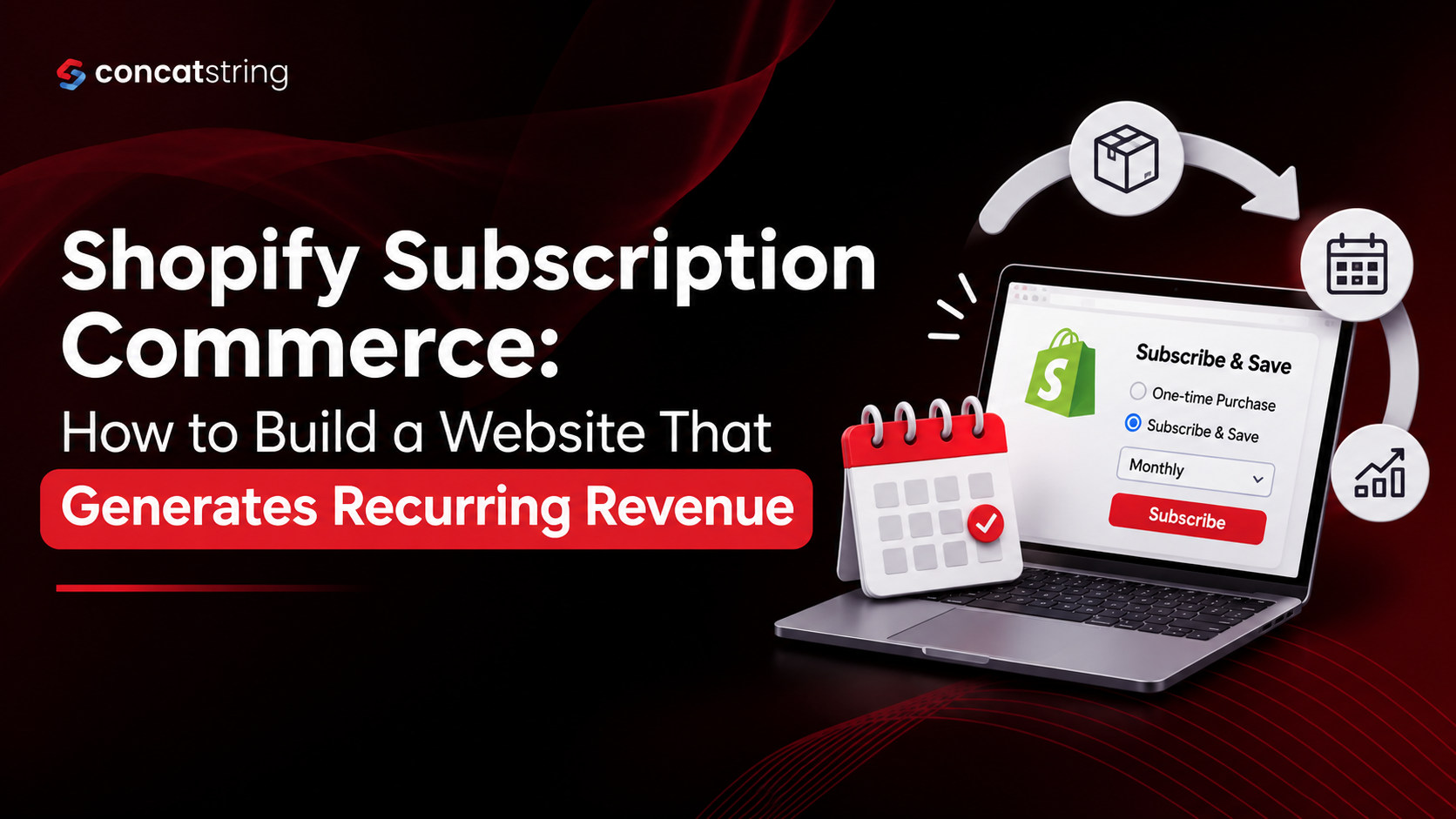
Subscription commerce is changing how ecommerce brands think about growth. Instead of relying entirely on one-time purchases, businesses can create predictable revenue by giving customers a convenient reason to buy again on a regular schedule. Shopify supports recurring purchase models through subscription apps, selling plans, subscription contracts, and customer management tools. Shopify currently powers millions of merchants across more than 175 countries, with merchants generating $378 billion in GMV during 2025.
Table of Contents
Use AI to summarize this article
What Is Shopify Subscription Commerce?
Shopify subscription commerce is an ecommerce model where customers agree to purchase a product or service repeatedly according to a defined schedule. Depending on the business model, customers may receive products weekly, monthly, or at another agreed frequency. Shopify describes subscriptions as a way to create predictable recurring revenue while developing longer-term customer relationships.
The model works particularly well for products that customers naturally replenish or use continuously. Beauty products, skincare, supplements, coffee, pet products, household essentials, software, memberships, and curated product boxes can all be structured around recurring purchases. The important point is that a subscription should solve a recurring customer need rather than simply turn a normal product into an automatic charge.
Shopify's subscription infrastructure uses selling plans and subscription contracts to define important details such as pricing, billing frequency, delivery schedules, and the products included in the subscription. This gives merchants considerably more flexibility than simply adding a recurring payment button to a product page.
Why Are Ecommerce Brands Moving Toward Subscription Models?
The biggest advantage of subscription commerce is predictability. A traditional ecommerce business may have to generate a new purchase from the same customer every time that customer needs a product. A subscription model can automate that relationship while giving customers convenience and giving the business a more reliable view of future demand.
Shopify itself identifies predictable revenue, customer loyalty, and opportunities for cross-selling and upselling as key benefits of subscriptions. Regular customer interactions can also create more opportunities to introduce complementary products and services.
However, recurring revenue should not be confused with guaranteed revenue. Customers can pause, skip, or cancel subscriptions, and businesses still need to provide enough value to keep customers subscribed. A strong subscription website therefore focuses as much on retention and customer experience as it does on the initial conversion.
How to Build a Shopify Subscription Website
Start With the Right Subscription Model
The first step is deciding what customers are actually subscribing to. A replenishment model works when customers regularly need the same product, such as coffee or skincare. A curated model can work when customers want new products selected for them. A membership model can provide access to benefits, discounts, content, or services rather than physical products.
The pricing structure should also make the recurring commitment easy to understand. For example, a brand might offer a one-time purchase at $30 and a monthly subscription at $27, but the discount should be connected to a genuine customer benefit rather than being the only reason to subscribe.
Design the Product Page Around the Subscription
Subscription options should be visible before the customer reaches checkout. Shopify allows subscription plans to be displayed through subscription widgets, and merchants can provide different frequencies and discount structures depending on their setup.
The product page should clearly explain the price, delivery frequency, savings, renewal terms, and cancellation or management options. Customers should never have to search through multiple pages to understand what will happen after they subscribe. Clear information reduces hesitation and makes the recurring commitment feel more transparent.
Make Subscription Management Simple
A subscription relationship continues after checkout, so the customer account experience matters. Customers should be able to manage their payment method, shipping details, subscription frequency, and upcoming orders without contacting support for every small change.
Shopify's subscription functionality supports actions such as modifying, skipping, pausing, and cancelling subscription plans, depending on the implementation. Customers can also manage subscription purchases through their customer accounts.
This flexibility is important because cancellation should not be the only alternative when a customer no longer wants the next shipment. A pause option, frequency change, smaller quantity, or temporary skip can sometimes preserve the relationship while still respecting the customer's needs.
Want to build a Shopify store designed around recurring revenue rather than one-time transactions? Concatstring can help plan and develop a subscription-focused Shopify experience with the right ecommerce architecture, customer journey, and conversion strategy.
The Technology Behind Shopify Subscriptions
Shopify subscriptions are supported through a structured system of selling plans, subscription contracts, billing policies, and delivery policies. When a customer purchases a subscription, Shopify creates the relevant transaction and order, while the subscription system manages the recurring relationship and future billing activity.
For businesses using third-party subscription applications, the technical setup becomes particularly important. The subscription application may need to handle billing attempts, subscription status changes, payment failures, webhooks, and customer-facing subscription management. Shopify provides APIs specifically for these use cases.
This is why subscription commerce should be treated as more than a design project. The storefront, checkout experience, subscription logic, customer account, payment workflow, fulfilment process, analytics, and retention strategy all need to work together.
How to Increase Subscription Conversion and Retention
Give Customers a Clear Reason to Subscribe
A recurring purchase needs a stronger value proposition than simply "buy this again." The customer should understand why subscribing is better. That benefit could be a lower price, automatic delivery, exclusive products, early access, convenience, flexible delivery, or member-only benefits.
The strongest subscription offers usually combine convenience with meaningful value. If customers can easily purchase the same product whenever they want, the subscription needs to provide an additional reason to commit.
Reduce Friction After the First Purchase
Subscription retention often depends on what happens after the initial conversion. Customers should receive useful notifications, understand upcoming charges, and have control over their subscription. Shopify's subscription tools support customer notifications and management features that can help create this ongoing experience.
Businesses should also monitor active subscriptions, cancellations, pauses, failed payments, and other lifecycle signals. These metrics can reveal where customers are leaving and where improvements to pricing, products, or customer experience may be needed.
Build for Long-Term Customer Value
The goal of Shopify subscription commerce should not simply be increasing the number of subscribers. The better objective is increasing customer lifetime value while maintaining a healthy customer experience.
For example, a skincare company could start a customer with a monthly cleanser subscription and later recommend moisturizer or sunscreen based on purchasing behaviour. A coffee brand could offer different roast options, while a pet brand could allow customers to adjust quantities as their needs change.
The subscription becomes more valuable when it evolves with the customer rather than locking the customer into a rigid purchasing pattern.
Common Shopify Subscription Mistakes to Avoid
One common mistake is making the subscription offer difficult to understand. If customers cannot immediately identify the recurring price, frequency, savings, and cancellation terms, they may avoid subscribing altogether.
Another mistake is forcing customers into inflexible plans. A customer who needs to skip one month should not necessarily have to cancel the entire relationship. Shopify's subscription ecosystem supports flexible management options, making it possible to design a better lifecycle experience.
Businesses should also avoid treating subscriptions as a purely technical implementation. Installing an app can enable recurring billing, but it does not automatically create a compelling subscription business. Product-market fit, pricing, retention, customer support, fulfilment, and marketing still determine whether the model works.
Is Shopify Subscription Commerce Right for Your Business?
Shopify subscription commerce can be a strong option when customers have a recurring need, the product provides continuing value, and the business can deliver consistently. It is less suitable when purchases are highly irregular or customers have little reason to buy the same product again.
The opportunity is also becoming broader as ecommerce platforms expand how products can be discovered and purchased. Shopify has been investing heavily in commerce across different digital surfaces, including AI-powered shopping experiences, while continuing to expand its commerce infrastructure.
For businesses considering subscriptions, the right question is therefore not simply "Can Shopify handle subscriptions?" It can. The more important question is whether the product, pricing, technology, and customer experience are designed to make recurring purchasing valuable for both the customer and the business.
Build a Shopify Subscription Store With Concatstring
A successful subscription website needs more than recurring payments. It needs a clear offer, conversion-focused product pages, flexible subscription management, reliable ecommerce technology, and a customer journey designed for retention.
Concatstring can help businesses plan, design, and develop Shopify experiences built around recurring revenue. From subscription architecture and storefront development to integrations and conversion-focused ecommerce experiences, the goal is to create a Shopify store that supports sustainable customer relationships instead of relying only on one-time sales.
If your business has a product customers regularly need, now may be the right time to explore a subscription model and turn repeat purchases into a more predictable revenue channel.
FAQs