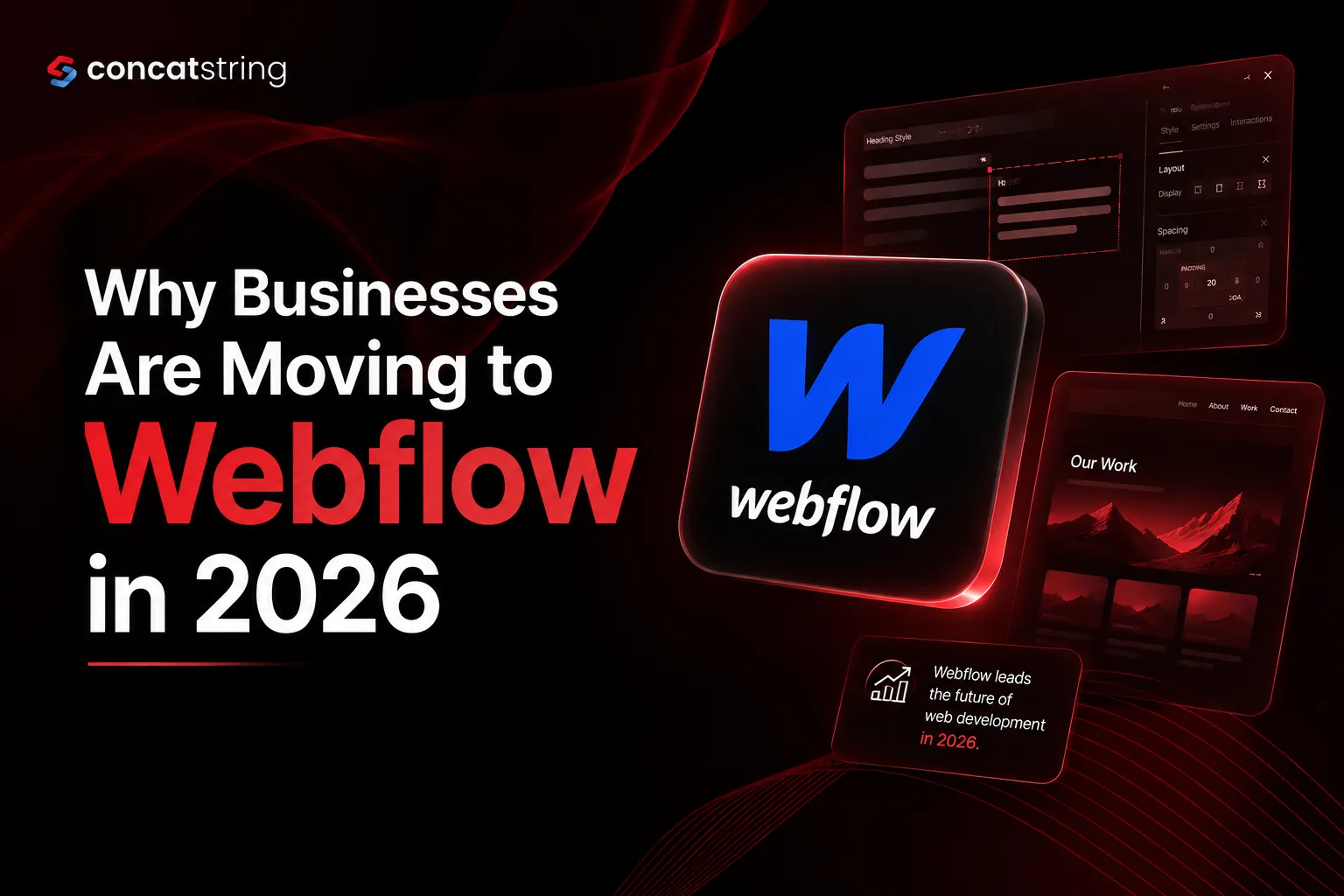
The demand for modern, scalable, and high-performing websites is accelerating rapidly in 2026. According to Statista, global spending on digital transformation is expected to exceed $3.9 trillion by 2027, while businesses continue prioritizing faster website launches, better SEO performance, and lower development dependency. At the same time, marketers and startups are looking for platforms that reduce operational complexity without sacrificing design flexibility. This shift is one of the biggest reasons why businesses are increasingly investing in webflow development in 2026. From enterprise brands to SaaS startups, companies are adopting Webflow to build visually advanced, SEO-optimized, and conversion-focused websites faster than traditional development approaches.
Table of Contents
Use AI to summarize this article
The Growing Demand for Agile Website Development
Businesses in 2026 are operating in a highly competitive digital environment where speed, flexibility, and user experience directly influence growth. Traditional website development workflows often involve long development cycles, complex plugin management, and ongoing maintenance challenges. These limitations create friction for marketing teams and business owners who need faster updates and scalable digital experiences.
Webflow has emerged as a preferred platform because it bridges the gap between visual design and advanced front-end development. Instead of relying heavily on multiple developers for every small website change, teams can manage content, publish updates, and optimize pages with greater independence.
According to HubSpot research, companies that prioritize website experience and user-centered design see significantly higher lead generation and customer engagement.
This growing focus on agility is one of the biggest reasons why webflow development in 2026 is gaining momentum across industries.
What Makes Webflow Different From Traditional CMS Platforms?
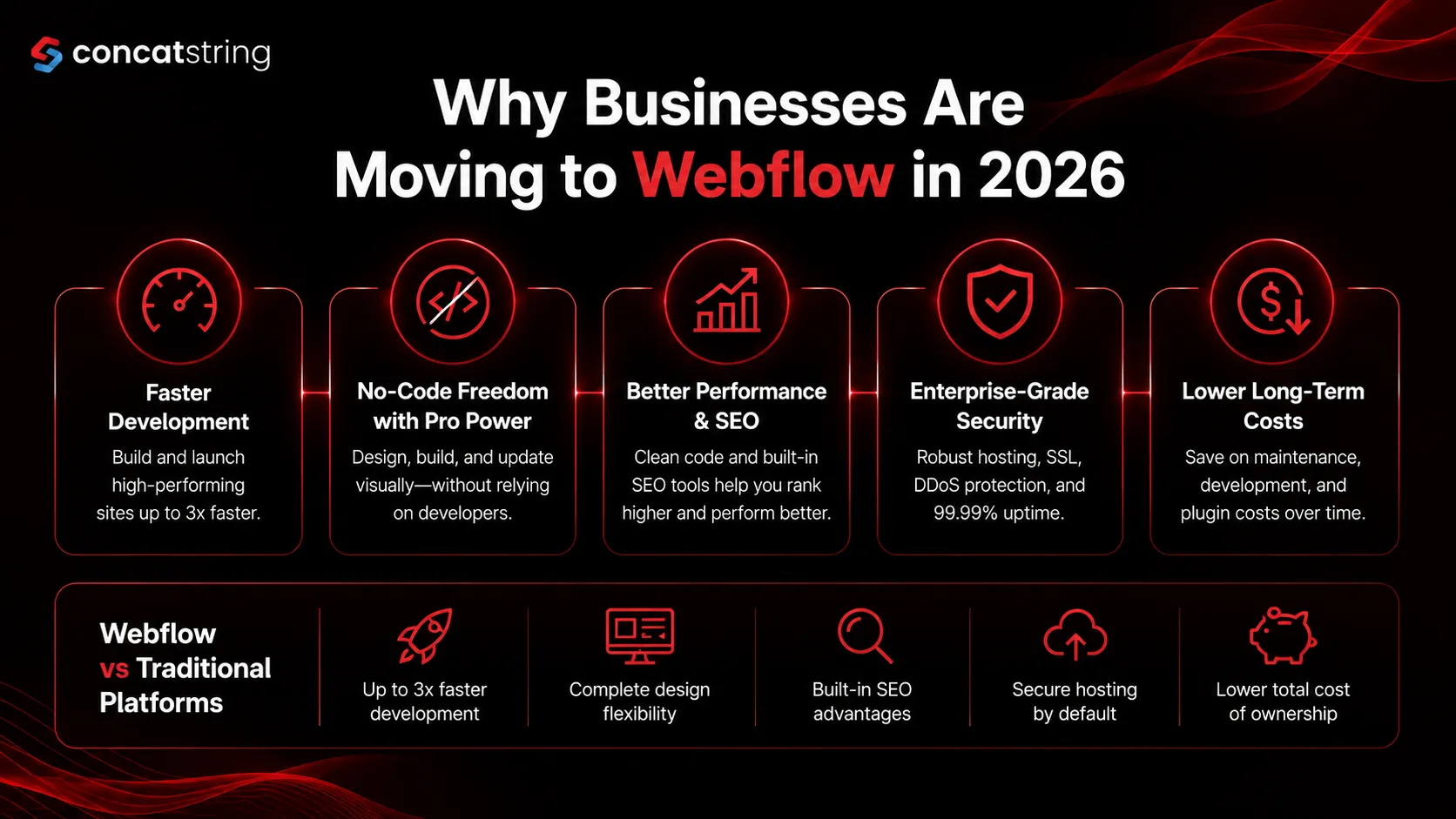
Visual Development Without Compromising Flexibility
One of Webflow’s strongest advantages is its visual development environment. Unlike rigid website builders, Webflow gives designers and developers granular control over layout structure, animations, responsiveness, and interactions.
Businesses no longer want websites that look templated or outdated. In 2026, brand differentiation matters more than ever. Webflow enables companies to create highly customized digital experiences while maintaining clean code output and strong performance.
This is especially valuable for:
- SaaS companies
- Startups
- Agencies
- Ecommerce brands
- B2B service providers
- Personal brands
Traditional CMS platforms often require multiple plugins and third-party tools to achieve similar flexibility, which can negatively impact website speed and security.
Reduced Development Dependency
Many businesses are moving away from systems that require constant developer involvement for minor changes. Marketing teams today need the ability to:
- Publish landing pages quickly
- Update content independently
- Run campaigns faster
- Launch microsites efficiently
- Improve SEO pages regularly
Webflow’s CMS and Editor capabilities allow non-technical teams to manage content without breaking website design structures.
This operational efficiency reduces long-term maintenance costs and improves workflow speed.
Cleaner Website Architecture
Website performance has become a critical ranking and conversion factor. Google research continues to show that slow-loading websites increase bounce rates significantly.
Webflow produces cleaner front-end code compared to many plugin-heavy CMS environments. This helps businesses improve:
- Core Web Vitals
- Mobile responsiveness
- Website loading speed
- SEO crawlability
- User experience
As search engines prioritize user experience metrics more aggressively in 2026, businesses are increasingly prioritizing platforms that support technical SEO from the foundation.
Why Webflow Development in 2026 Is Becoming a Strategic Business Decision
Faster Time-to-Market
Speed matters in modern digital business. Whether launching a product, validating a startup idea, or running a campaign, businesses cannot afford months-long website development timelines.
Webflow significantly reduces production cycles because design and development happen within a unified environment. Teams can prototype, design, test, and publish much faster.
This becomes especially important for:
- Venture-backed startups
- SaaS product launches
- Marketing campaigns
- High-growth ecommerce businesses
- Agencies managing multiple clients
McKinsey research highlights that companies with faster digital execution capabilities often outperform competitors in customer acquisition and innovation.
Better SEO Capabilities
SEO in 2026 is far more sophisticated than keyword optimization alone. Businesses now need websites that support:
- Fast performance
- Structured content
- Mobile optimization
- Clean HTML markup
- Schema implementation
- Technical SEO flexibility
Webflow provides strong native SEO features, including:
- Editable meta titles and descriptions
- Clean URL structures
- Custom schema support
- Open Graph controls
- XML sitemap generation
- Canonical tags
- 301 redirects
This makes Webflow attractive for brands focused on organic traffic growth.
According to BrightEdge, organic search still drives over 50% of trackable website traffic across industries.
Stronger Website Security
Cybersecurity risks continue increasing globally, and businesses are prioritizing secure digital infrastructure.
Traditional CMS platforms that rely heavily on plugins often create security vulnerabilities through outdated dependencies.
Webflow minimizes this risk because hosting, CMS infrastructure, and platform management are centralized.
Benefits include:
- SSL certificates included
- Reduced plugin dependency
- Managed hosting environment
- Automatic infrastructure maintenance
- Enterprise-grade hosting support
For businesses without large internal development teams, this reduces technical overhead significantly.
How Webflow Supports Modern Marketing Teams
Landing Page Scalability
Marketing teams in 2026 require rapid experimentation. Businesses are constantly launching:
- Paid ad campaigns
- Product pages
- Webinar funnels
- Lead generation assets
- Event microsites
- Conversion-focused landing pages
Traditional development bottlenecks slow down marketing execution.
Webflow allows marketing teams to launch and iterate pages much faster while preserving design consistency.
This flexibility improves:
- Campaign speed
- Conversion optimization
- A/B testing workflows
- User experience consistency
- Marketing agility
Content Marketing and SEO Publishing
Content marketing remains one of the highest ROI digital channels.
According to Semrush, businesses that consistently publish optimized content generate substantially more organic traffic and inbound leads.
Webflow’s CMS structure supports scalable content publishing for:
- Blogs
- Case studies
- Resource centers
- Documentation hubs
- Industry pages
- Dynamic SEO content
This makes it highly suitable for businesses focused on long-term organic growth.
Improved Collaboration Between Teams
One underrated reason businesses are adopting Webflow development in 2026 is improved cross-functional collaboration.
Designers, developers, marketers, and content teams can work more efficiently within a shared system.
Instead of fragmented workflows involving multiple tools and disconnected staging processes, Webflow centralizes much of the website production workflow.
This reduces communication friction and accelerates project timelines.
The Rise of No-Code and Low-Code Development
Why Businesses Are Prioritizing Efficiency
The global no-code and low-code market continues expanding rapidly as businesses seek faster and more cost-effective development solutions.
According to Gartner, a majority of new enterprise applications are expected to use low-code or no-code technologies.
Webflow sits at the intersection of:
- Visual development
- Professional web design
- Front-end flexibility
- Scalable CMS architecture
- Low-code operational efficiency
Businesses are realizing they no longer need massive engineering resources for every marketing website initiative.
Empowering Non-Technical Teams
One of the most significant operational shifts happening in 2026 is the democratization of website management.
Marketing leaders increasingly want ownership over:
- Campaign launches
- SEO content updates
- Conversion optimization
- Landing page testing
- Content publishing
Webflow enables this without sacrificing quality.
This is especially beneficial for startups and growing businesses with lean teams.
Webflow and Website Performance in 2026
Core Web Vitals and User Experience
Google continues prioritizing user experience signals in search rankings.
Core Web Vitals metrics such as loading speed, visual stability, and interaction responsiveness influence both SEO and conversion rates.
Webflow’s optimized hosting and clean code structure help businesses improve technical performance more effectively than many legacy CMS platforms.
This translates into:
- Lower bounce rates
- Higher engagement
- Better mobile experiences
- Improved SEO rankings
- Increased conversion potential
Mobile-First Website Experiences
Mobile traffic dominates across most industries.
Statista reports that mobile devices account for more than half of global website traffic.
Webflow’s responsive design capabilities allow businesses to create highly optimized mobile experiences without separate mobile development workflows.
This becomes increasingly important as mobile-first indexing continues shaping search visibility.
Why Agencies and Startups Prefer Webflow
Faster Client Delivery
Agencies are under pressure to deliver projects faster while maintaining premium quality.
Webflow allows agencies to:
- Reduce development time
- Improve design quality
- Simplify client handoff
- Reduce maintenance issues
- Launch projects faster
This operational advantage improves profitability and scalability for digital agencies.
Easier Website Maintenance
Traditional websites often require:
- Frequent plugin updates
- Security patches
- Hosting management
- Compatibility fixes
- Developer troubleshooting
Webflow significantly reduces these recurring maintenance burdens.
This creates a better long-term ownership experience for businesses.
Better Design Freedom for Brands
Brand experience has become a major competitive differentiator.
Businesses want websites that feel:
- Interactive
- Premium
- Modern
- Unique
- Conversion-focused
Webflow’s advanced animation and interaction capabilities enable visually sophisticated experiences without excessive custom coding.
This is particularly valuable for:
- Creative agencies
- SaaS platforms
- Technology startups
- Luxury brands
- Personal brands
Common Concerns Businesses Have About Webflow
Is Webflow Scalable?
One common misconception is that Webflow only supports small websites.
In reality, many enterprise businesses and rapidly scaling startups now use Webflow for marketing websites, documentation systems, and content-driven experiences.
Its CMS flexibility, API integrations, and scalable hosting make it suitable for a wide range of use cases.
Is Webflow Good for SEO?
Yes. Webflow is considered highly SEO-friendly because it provides:
- Fast page speed
- Clean code
- Custom metadata controls
- Structured content capabilities
- Responsive design
- Technical SEO flexibility
However, SEO success still depends on content quality, keyword strategy, and optimization practices.
Does Webflow Replace Developers Completely?
Not entirely.
While Webflow reduces dependency on traditional front-end development for many projects, experienced developers still add value through:
- Custom integrations
- Advanced functionality
- API development
- Technical optimization
- Complex automation
The biggest difference is that businesses can operate more efficiently with smaller development overhead.
The Future of Webflow Development in 2026 and Beyond
The digital experience landscape is evolving rapidly. Businesses increasingly want platforms that combine:
- Design flexibility
- SEO readiness
- Faster deployment
- Operational efficiency
- Scalability
- Performance optimization
Webflow aligns closely with these priorities.
As AI-generated content, personalized user experiences, and conversion-focused design continue growing in importance, businesses need website platforms capable of adapting quickly.
Webflow’s ecosystem continues expanding with:
- Advanced integrations
- AI-assisted workflows
- Ecommerce enhancements
- Enterprise collaboration tools
- Automation capabilities
This positions Webflow as a long-term solution rather than just a design trend.
For many businesses, adopting webflow development in 2026 is no longer simply about aesthetics. It is about building a faster, more scalable, and more agile digital infrastructure.
Internal Linking Suggestions
- Webflow website development services
- SEO-focused website development
- SaaS website design solutions
- Conversion rate optimization services
- Custom CMS development
- UI/UX design services
Conclusion
Businesses are moving to Webflow in 2026 because the platform solves several modern digital challenges simultaneously. It enables faster website launches, stronger SEO performance, cleaner website architecture, lower maintenance dependency, and improved collaboration between teams. As companies prioritize agility, scalability, and high-performing user experiences, Webflow is becoming a strategic platform choice for startups, agencies, SaaS brands, and enterprise businesses alike. The shift toward visual development, low-code workflows, and performance-driven design is only accelerating. Businesses that invest in scalable and SEO-optimized website systems today are positioning themselves for stronger long-term digital growth.
If your business is planning to build a modern, scalable, and conversion-focused website, Concatstring can help you leverage Webflow development in 2026 to create high-performing digital experiences tailored to your growth goals. From SEO-focused website architecture to advanced UI/UX implementation, Concatstring helps businesses build websites that combine design, speed, and scalability effectively.
FAQs