Is a Website Enough to Grow Your Business in 2025, or Do You Need a Mobile App Too?

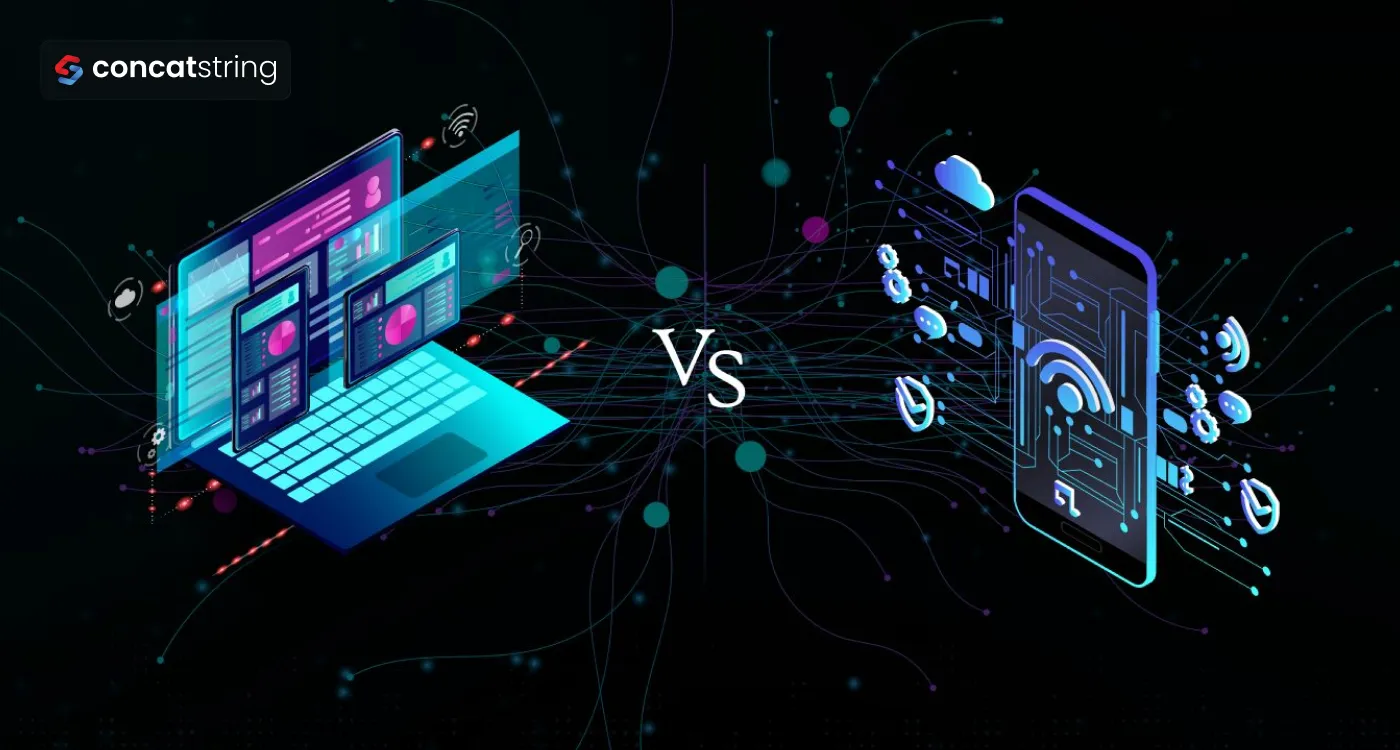
Table of Contents
Use AI to summarize this article
Why a Website Is Good for Your Business

A well-built website remains the foundation of online growth. It offers wide accessibility and credibility—anyone with internet access can reach it, without downloads or installations. Key benefits include:
- Credibility & Trust: Customers trust brands with professional websites. A polished site shows you’re serious and “lends credibility to your brand.”
- SEO & Discoverability: Websites can be indexed by search engines. A mobile-friendly, SEO-optimized site ranks higher on Google, making you easy to find online.
- 24/7 Availability: Your site operates 24/7. Visitors can learn about your services, view your portfolio, or buy products at any time. This constant availability builds trust by meeting customer expectations for immediate information.
- Lead Generation & Sales: Websites support contact forms, email sign-ups, e-commerce carts, and more. These tools capture high-intent leads and drive sales. For example, integrated forms and promotions on your site can “significantly increase conversion.”
- Marketing & Analytics: You control your content and branding on a website. It’s a hub for content marketing (blogs, FAQs, etc.), social media links, and email campaigns. Plus, built-in analytics give data-driven insights—you can see which pages perform best, track visitor behavior, and refine your strategy.
- Global Reach & Cost Efficiency: A website enables you to reach customers worldwide, overcoming geographic barriers. It’s also generally more cost-effective than running a physical store or developing multiple platform-specific apps. The overhead of a web presence (hosting, maintenance) is far lower than brick-and-mortar costs.
In short, updating or renovating an existing site can modernize your brand image and leverage these advantages. A responsive, fast-loading website is essential for credibility, organic traffic, and brand building.
Why a Mobile App Is Good for Your Business
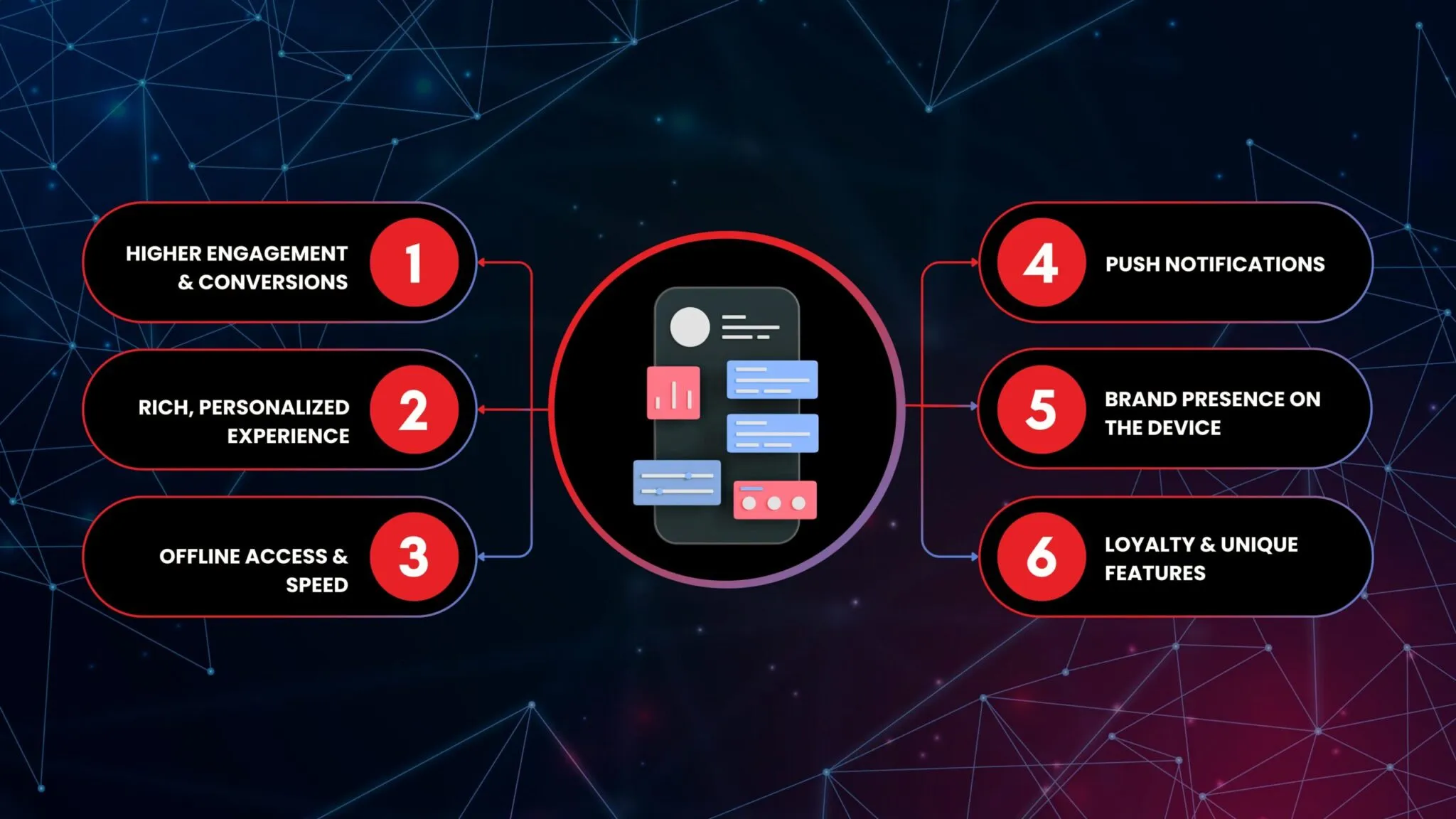
While websites cast a wide net, mobile apps can deeply engage your users. People today spend the vast majority of their mobile time in apps—about 90% of mobile internet time—and apps often convert better. Some benefits of a mobile app include:
- Higher Engagement & Conversions: Apps are designed for user engagement. Data shows users browse 4.2× more products per session on apps, and apps achieve “157% higher conversion rates than mobile websites.” In sectors like entertainment, travel, or on-demand services, apps can drive vastly more sales (e.g., entertainment apps convert 233% higher, and travel apps 220% higher, than their mobile sites).
- Rich, Personalized Experience: Apps can access device features (GPS, camera, sensors) and user data (preferences, usage patterns) to offer customized content and recommendations. They also run faster since data is cached on the device, improving performance and UX. For example, a retail app might suggest products based on purchase history, while a travel app uses location for nearby deals.
- Offline Access & Speed: Once downloaded, many apps work offline or with slow connections. Content (like articles, shopping carts, or media) can be preloaded so customers can use the app without internet. This offline capability (unique to apps) keeps users engaged even off-network.
- Push Notifications: Apps let you send instant updates straight to users’ devices. Push messages (about promotions, alerts, or new content) have ~20% open rates, far above email. This direct channel dramatically boosts re-engagement and retention.
- Brand Presence on the Device: A mobile app lives on users’ home screens. Even when they close the browser, your app icon (and brand) remains visible. This constant presence (plus visibility in app stores) reinforces brand recall and loyalty.
- Loyalty & Unique Features: Apps can host loyalty programs, in-app chats, exclusive deals, or VR/AR features. These foster deeper relationships and repeat usage that a website alone often can’t.
In essence, a mobile app gives you a direct line to your customers with a richer, more convenient experience than the mobile web. This drives higher retention and revenue from your most valuable users.
Mobile App vs. Website: A Quick Comparison
This comparison illustrates the trade-offs. Websites (web or mobile sites) are easy to access and maintain at a lower cost, making them ideal for broad reach and SEO. Apps, meanwhile, can drive deeper engagement with richer features.
Conclusion
Ultimately, whether a website alone will suffice depends on your business goals and the complexity of your business. A website is essential for credibility, SEO, and reaching the widest audience. But if your customers interact frequently, an app can unlock higher engagement and revenue. As one guide notes, websites are key for discoverability and accessibility, while apps excel at personalization and loyalty. In practice, many successful businesses use both—a responsive website for search visibility, plus a companion app for repeat customers.
Deciding which path to take means assessing your audience, budget, and features. For a basic online presence or service-oriented business, a strong website (built via a website development service) may be the best start. For a consumer brand needing frequent user interaction, investing in a mobile app (through a mobile app development service) can pay off.
Ready to grow?
Let’s find the right solution for your business. Schedule a free consultation call with our industry experts (6+ years of experience building great apps and websites). We’ll help you choose and build the perfect platform. Contact us today!