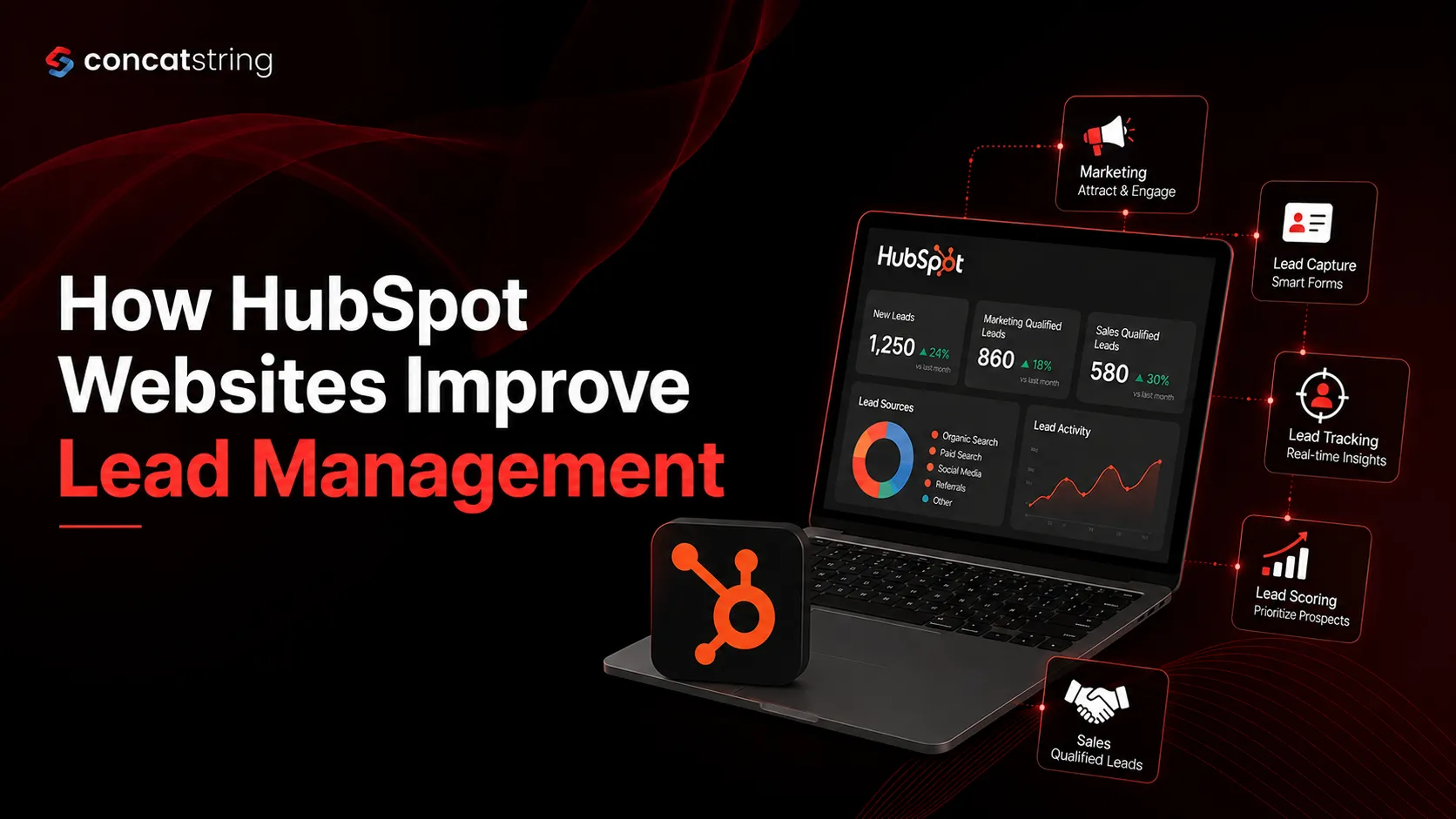
Generating leads is only one part of the growth equation. The real challenge lies in managing those leads effectively and moving them through the sales funnel without losing momentum. As customer journeys become increasingly digital, businesses need systems that can track interactions, automate engagement, and provide complete visibility into every prospect's journey. This is where HubSpot for Lead Management delivers significant value. By combining website functionality, CRM capabilities, marketing automation, and analytics into a single platform, HubSpot helps businesses transform their websites into powerful lead management engines that support sustainable growth.
Table of Contents
Use AI to summarize this article
Why Modern Businesses Need Better Lead Management
Many organizations invest heavily in digital marketing campaigns to drive traffic and generate inquiries. However, once those leads enter the pipeline, businesses often struggle with inconsistent follow-up processes, fragmented customer data, and limited visibility into buyer behavior.
When lead information is scattered across spreadsheets, email platforms, and separate CRM systems, valuable opportunities can easily be missed. Sales teams may contact prospects too late, while marketing teams often lack the insights needed to understand which campaigns generate the highest-quality leads.
Effective lead management solves these challenges by creating a structured process that captures, organizes, tracks, and nurtures prospects throughout the buying journey. This process becomes significantly more effective when it is supported by a platform designed to connect every customer interaction.
What Is HubSpot for Leads Management?
HubSpot for Leads Management refers to the use of HubSpot's integrated ecosystem to manage prospects from their first website visit through conversion and beyond. Unlike traditional systems that require multiple disconnected tools, HubSpot centralizes customer information within a unified CRM.
Every interaction a visitor has with your website is automatically recorded. Whether a prospect downloads a guide, submits a contact form, views a pricing page, or engages with an email campaign, HubSpot creates a detailed timeline of activities that both marketing and sales teams can access.
This centralized approach allows businesses to understand customer intent more accurately and respond with personalized communication at every stage of the buying process.
How HubSpot Websites Improve Lead Management
A HubSpot website functions as more than a digital storefront. It becomes the foundation of a complete lead management strategy.
When visitors arrive through search engines, social media campaigns, paid advertisements, or referral sources, their activities are tracked and connected to a single customer profile. This creates a seamless flow of information between marketing and sales teams.
Instead of manually exporting lead data or relying on disconnected reporting systems, businesses gain real-time access to prospect behavior. This visibility allows teams to identify which content generates engagement, which pages influence conversions, and which leads demonstrate strong buying intent.
As a result, decisions become more data-driven and opportunities are less likely to fall through the cracks.
Smarter Lead Capture Creates Better Opportunities
One of the most valuable aspects of HubSpot websites is their ability to collect and organize lead information intelligently.
Traditional website forms often capture only basic details such as a name and email address. While this information is useful, it rarely provides enough context for meaningful follow-up conversations.
HubSpot's form capabilities allow businesses to gradually build detailed customer profiles over time. Rather than repeatedly asking visitors for the same information, the platform can gather additional data during future interactions. This creates a smoother user experience while providing sales teams with richer insights into each prospect.
The result is higher-quality lead data, more personalized communication, and stronger conversion potential.
Real-Time Behavioral Tracking Enhances Follow-Up
Timing plays a critical role in lead conversion. Studies consistently show that faster responses increase the likelihood of turning prospects into customers.
HubSpot enables businesses to monitor visitor behavior in real time. Sales teams can see which pages prospects view, how frequently they return to the website, which resources they download, and how they interact with marketing campaigns.
For example, a prospect who visits a pricing page multiple times and downloads a product comparison guide is likely demonstrating stronger purchase intent than someone casually browsing educational content.
These insights help sales representatives prioritize outreach efforts and tailor conversations based on actual customer interests.
Automated Lead Nurturing Improves Engagement
Most leads are not ready to make a purchase immediately. In many industries, buyers spend weeks or even months researching solutions before contacting a vendor.
HubSpot helps businesses maintain engagement during this period through automated lead nurturing. Once a visitor submits a form or downloads a resource, automated workflows can deliver relevant content based on their interests and stage in the buying journey.
Instead of relying on manual follow-up, businesses can provide prospects with educational articles, case studies, webinar invitations, and product information automatically.
This consistent engagement keeps brands top of mind while helping prospects move closer to a purchasing decision.
According to HubSpot's research, personalized marketing experiences significantly improve engagement and lead generation outcomes.
Lead Scoring Helps Sales Teams Focus on the Right Prospects
Not every lead enters the sales funnel with the same level of intent. Some visitors may be gathering information, while others are actively evaluating vendors and preparing to make a decision.
HubSpot's lead scoring functionality helps businesses distinguish between these different types of prospects. By evaluating both demographic information and behavioral signals, the platform assigns scores that indicate the likelihood of conversion.
This allows sales teams to prioritize high-value opportunities and spend less time pursuing leads that are unlikely to convert.
Over time, this approach improves productivity, increases efficiency, and helps organizations generate greater returns from their marketing investments.
Better Alignment Between Marketing and Sales
One of the biggest obstacles to effective lead management is the disconnect that often exists between marketing and sales departments.
Marketing teams focus on generating demand, while sales teams focus on closing deals. Without shared visibility into customer interactions, these teams often operate with different information and different priorities.
HubSpot solves this challenge by creating a centralized source of truth. Both departments can access the same lead records, engagement history, campaign attribution data, and communication timelines.
This transparency improves collaboration and ensures that prospects experience a more consistent buying journey from first interaction to final conversion.
Data-Driven Reporting Improves Decision-Making
Businesses cannot improve what they do not measure. HubSpot provides comprehensive reporting capabilities that help organizations understand how leads move through the sales funnel.
Teams can analyze lead sources, conversion rates, customer acquisition trends, and revenue attribution within a single dashboard. These insights make it easier to identify successful campaigns, optimize underperforming channels, and allocate resources more effectively.
Rather than relying on assumptions, decision-makers gain access to accurate data that supports strategic growth initiatives.
Why Businesses Choose HubSpot for Leads Management
Organizations increasingly choose HubSpot because it combines website management, CRM functionality, automation, reporting, and lead nurturing within one platform.
Instead of managing multiple disconnected tools, businesses can create a unified customer experience supported by centralized data and streamlined processes.
This not only improves operational efficiency but also enables teams to deliver more personalized interactions that drive higher conversion rates and stronger customer relationships.
As competition continues to increase across digital channels, businesses that invest in connected lead management systems are better positioned to capture opportunities, improve sales performance, and achieve long-term growth.
Conclusion
A website should do more than generate traffic—it should actively support revenue growth. HubSpot enables businesses to transform their websites into intelligent lead management platforms that capture customer data, track engagement, automate nurturing, and support sales conversion efforts. By creating a connected experience across marketing, sales, and customer interactions, HubSpot helps organizations manage leads more effectively and maximize the value of every opportunity. For businesses seeking scalable growth, adopting HubSpot for Lead Management can be a significant competitive advantage.
At Concatstring, we help businesses build high-performing HubSpot websites designed to improve lead capture, streamline lead management, and increase conversions. Whether you're implementing HubSpot for the first time or looking to optimize an existing setup, our team can create a tailored solution that supports your growth goals and delivers measurable results.
FAQs


.png)
.png)