Table of Contents
Use AI to summarize this article
Mobile app development step-by-step guide
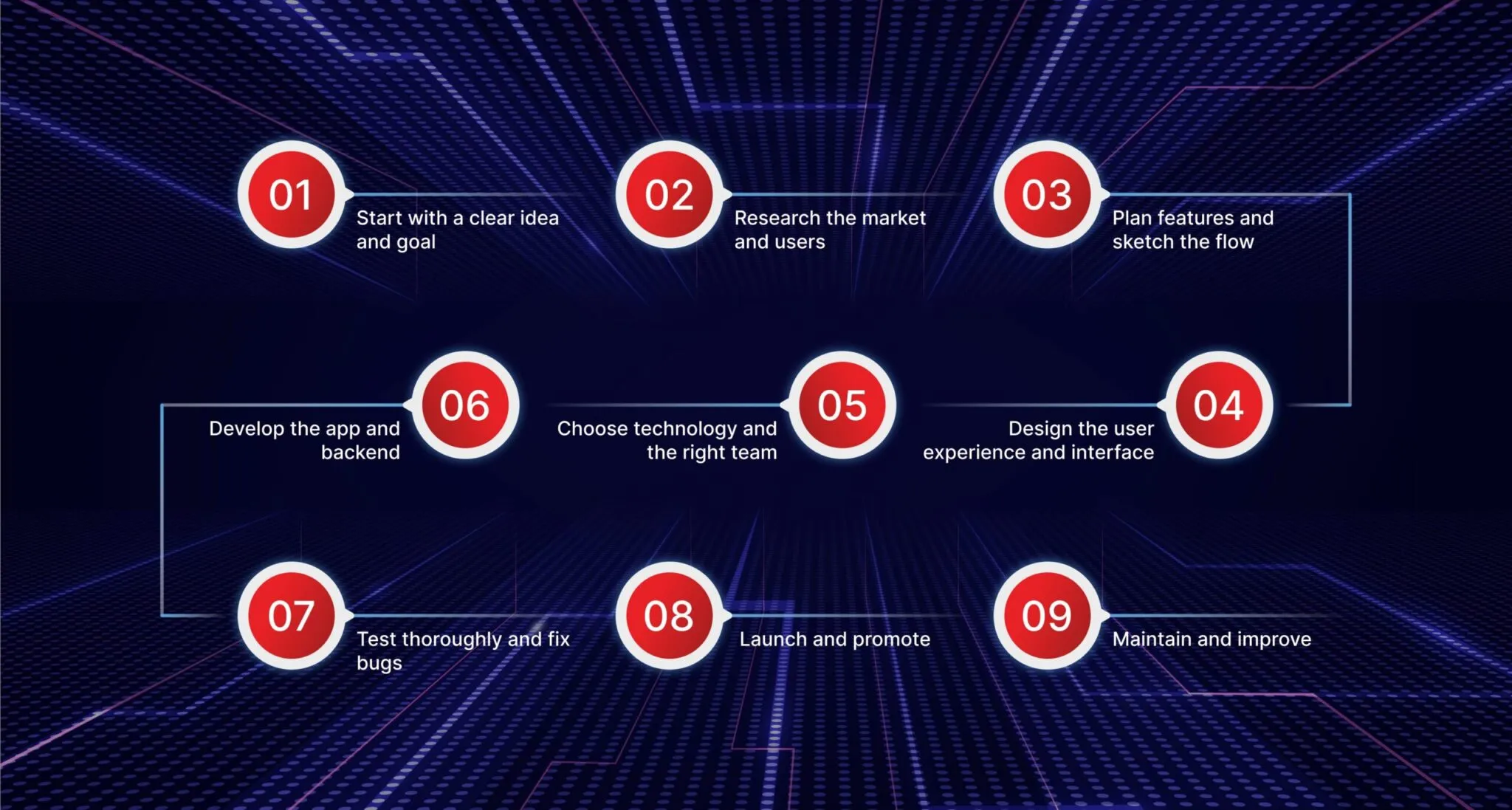
Start with a clear idea and goal
Every app begins with a problem you want to solve. Describe who will use the app, what pain it solves, and what success looks like. Keep the idea small at first. Many good apps started as one simple feature that worked really well.
Research the market and users.
Look at other apps that try to solve the same problem. Read reviews to find what users like and what they hate. Talk to a few potential users if you can. Real feedback early helps you avoid building something nobody needs.
Plan features and sketch the flow.
Write down the key features you need for a first version. Create quick sketches of screens and the flow between them. This does not need to be pretty. A rough map of screens helps designers and developers know what to build next.
Design the user experience and interface.
Good design makes your app easy to use. Focus on main tasks and keep navigation simple. Use consistent colors, typography, and spacing. Prototype basic screens so you can tap through them and see how it feels. This step saves a lot of rework later.
Choose technology and the right team.
Decide whether to build native apps for each platform or a cross-platform app that works on both iOS and Android. Native often gives the best performance, while cross-platform can be faster to build and cheaper. If you have a limited budget, choose the option that fits your timeline and target users. Hire developers or partner with an agency that has proven experience in mobile app development.
Develop the app and backend.
Develop the frontend screens and the backend services that store data and handle login, payments, and notifications. Keep the code modular and write tests for critical parts. Use analytics from day one so you can see how people use your app and where they drop off.
Test thoroughly and fix bugs.
Testing is not just finding crashes. Test usability performance and security. Ask real users to try the app and watch them use it. Fix the important issues first, then polish the smaller things. A buggy app will lose users fast, even if the idea is strong.
Launch and promote
Launch to a small group first so you can catch any last-minute issues. Then roll out to a wider audience and promote it with clear messages about the problem your app solves. Use app store optimization, simple ads, and word of mouth. Monitor reviews and respond quickly.
Maintain and improve
After launch, you will collect feedback and data. Prioritize updates that fix real user problems and add features that improve retention. Keep the app updated with OS changes and security patches. Think long term and plan a product roadmap that grows with your users.
Conclusion
Mobile app development is a mix of clear thinking, simple design, technical work, and good listening to users. If you move slowly at first, do the research and test small ideas, you will save time and money. Most successful apps were not perfect on day one; they improved fast based on real use. Remember, build something useful, then make it better.
Get in touch for Concatstring.
Want help turning your idea into an app? Reach out to Concatstring for end-to-end mobile app development support from design to launch. Visit concatstring.com slash contact us to start a conversation with our team.