Table of Contents
Use AI to summarize this article
What is Enterprise Web Application Development?
Enterprise web application development is the process of designing and building custom web-based software for businesses to handle complex, organization-wide needs. In practice, it means creating robust, scalable, and secure web applications tailored to a company’s internal and external operations. Unlike a simple website for marketing, an enterprise web app might manage CRM systems, HR services, inventory (ERP), or supply chains. For example, one definition notes that this development “delivers different objectives across functions, such as internal communications, data management, and customer relationship management” via a browser-based interface.
Key characteristics of enterprise apps include high performance under load, strict data security, and deep integration with other business systems. They often support thousands of concurrent users and must interoperate with existing databases and services. In short, enterprise web development creates a unified online platform – a business solution – that powers critical company processes. It enables automation of workflows and collaboration across locations, helping organizations achieve their digital transformation goals.
Benefits of Enterprise Web Applications That Accelerate Digital Transformation
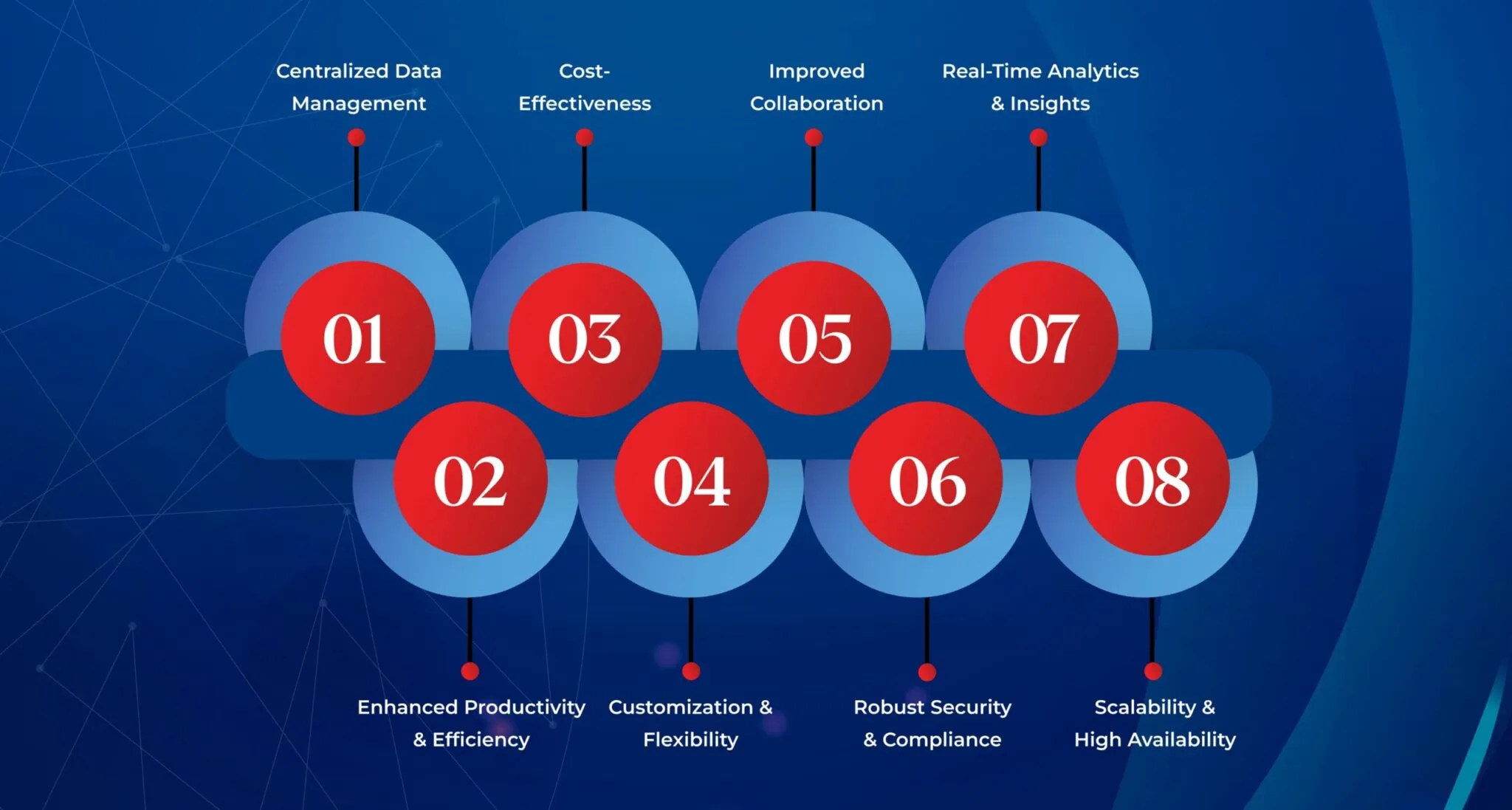
Enterprise web applications offer many advantages that drive efficiency and growth. Key benefits include:
- Centralized Data Management: These applications act as a single platform for storing and accessing business data. By eliminating data silos and duplication, they ensure consistency and real-time availability of information for decision-makers. For example, integrating multiple systems into one dashboard provides a “single source of truth,” improving data accessibility across the organization.
- Enhanced Productivity & Efficiency: Enterprise apps automate routine, repetitive tasks and streamline workflows. This saves time for employees and reduces human error. As one analysis notes, such automation “eliminates manual tasks” and “reduces errors,” allowing teams to focus on strategic initiatives. Automated forms, batch processing, and rule-based routing all contribute to faster operations and higher employee productivity.
- Cost-Effectiveness: Although custom enterprise apps require investment up front, they save money over time. By consolidating multiple tools into one platform, companies reduce licensing and maintenance costs. Enterprise solutions also minimize operational errors (like invoice mistakes) which can be costly to fix. One guide explains that these apps “reduce dependency on multiple third-party tools” and “minimize operational errors,” cutting down ongoing overhead.
- Customization & Flexibility: Every organization has unique needs, and enterprise web apps can be tailored accordingly. Unlike off-the-shelf software, custom enterprise solutions adapt as the business evolves. You can add new modules or scale features without disrupting existing workflows. According to experts, this “flexibility for scaling” and customization is a core advantage of enterprise development.
- Improved Collaboration: By providing a centralized space for information sharing, enterprise apps enhance teamwork. Features like shared dashboards, messaging, and file sharing let employees across departments, offices, and time zones work together seamlessly. For example, all teams can see live project statuses or update a common customer record at the same time. This transparency speeds up decisions and ensures everyone is aligned.
- Robust Security & Compliance: Security is paramount in enterprise solutions. These applications implement advanced measures (encryption, multi-factor authentication, role-based access controls) to protect critical data. They also support compliance with regulations (GDPR, HIPAA, PCI-DSS, etc.) through access audits and data governance. In practice, this means customer information and financial data stay safe, reducing the risk of breaches and costly fines.
- Real-Time Analytics & Insights: Enterprise web applications often include built-in reporting and analytics. Interactive dashboards present live data on key performance indicators, allowing managers to monitor business health in real time. For instance, sales and operations metrics can be updated instantly, so decision-makers can spot trends and respond quickly. This data-driven insight leads to smarter strategy and better resource allocation.
- Scalability & High Availability: Finally, enterprise web apps are designed to scale as the business grows. Using cloud infrastructure, microservices, and load balancing, these solutions can automatically expand to handle traffic spikes (like seasonal demand) without downtime. This scalability ensures the application stays responsive even under peak load. It also supports global access – employees and customers worldwide can use the service with minimal latency.
Enterprise Web Application Features That Drive Performance
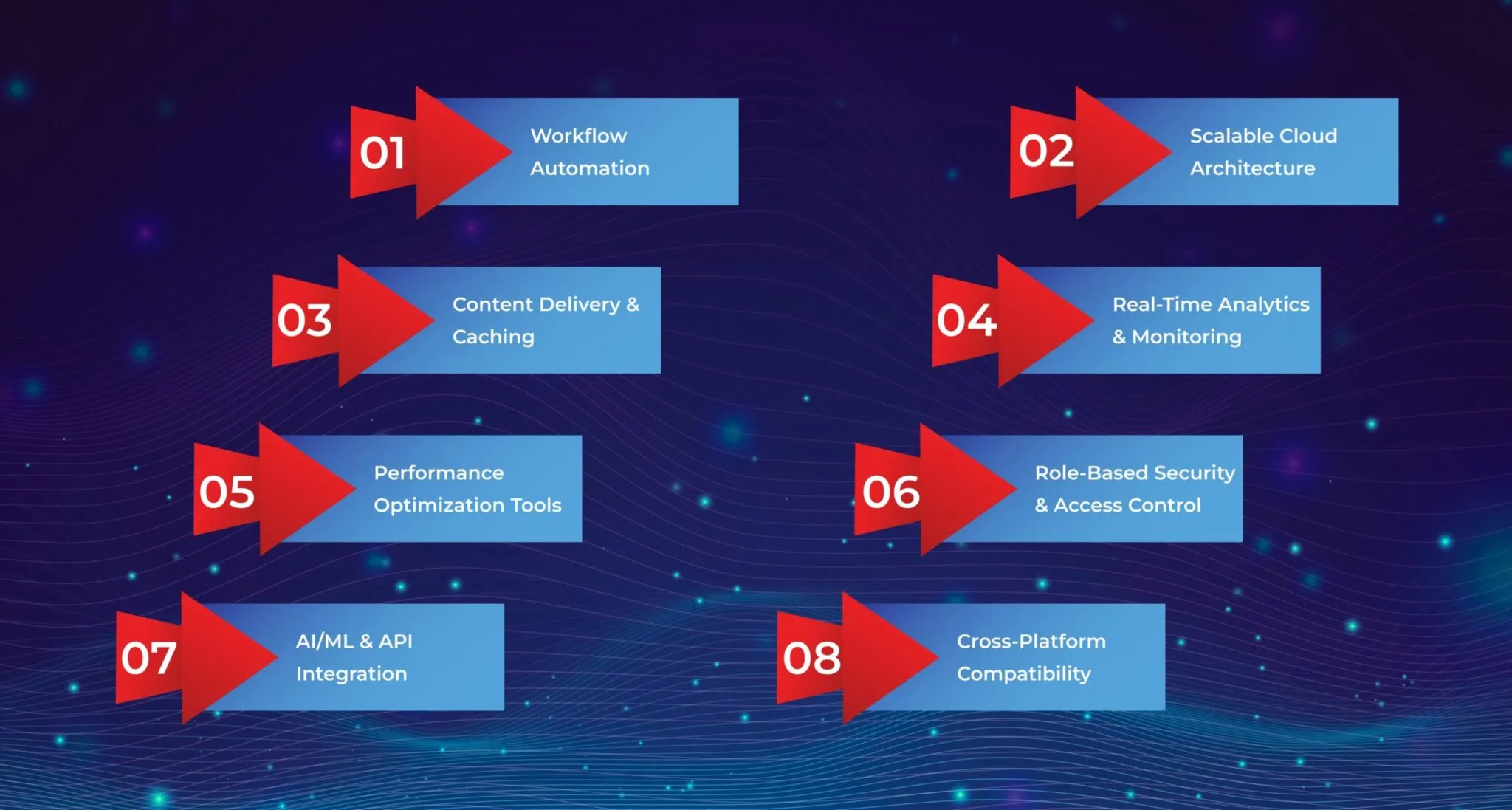
Enterprise web applications include many advanced features to ensure high performance, reliability, and usability. Key features include:
- Workflow Automation: System-driven workflows automate repetitive tasks (e.g. approvals, data entry, notifications), improving speed and reducing human error. Automation connects multiple departments effortlessly (for example, automatically routing a purchase order from sales to finance), freeing staff to focus on strategic work.
- Scalable Cloud Architecture: Leading enterprise apps use cloud deployment and microservices. This means the application runs on elastic cloud infrastructure with load balancers, automatically scaling resources up or down as needed. A microservices design (breaking the app into smaller services) allows individual components to scale independently, preventing any single part from becoming a bottleneck. Together, these features ensure the application remains available and fast under heavy usage.
- Content Delivery & Caching: To serve users globally, enterprise solutions often use Content Delivery Networks (CDNs) and caching layers. CDNs distribute content (images, downloads) across regional servers to reduce latency, while web caching holds frequently accessed data in memory. As one source notes, CDNs and modern hosting “reduce latency” and deliver content more quickly. Proper caching and delivery networks keep response times low, even for users far from the main servers.
- Real-Time Analytics & Monitoring: Built-in analytics engines and dashboards provide instant visibility into system performance and business metrics. The application continuously tracks performance KPIs (response time, error rates, user activity) and presents them in dashboards. This allows IT teams to detect bottlenecks immediately and tune the system (e.g. scaling up servers or adjusting code) to maintain optimal speed. Real-time monitoring tools and logs also help quickly diagnose and fix issues.
- Performance Optimization Tools: Enterprise apps include tools to maintain optimal speed and stability. This can involve advanced diagnostics, automated health checks, and server resource management. For example, during heavy usage, auto-scaling services will spin up new instances, and load balancers will evenly distribute traffic to avoid overloading any one server. These optimizations ensure the application remains responsive under even the busiest conditions.
- Role-Based Security & Access Control: To protect performance and data integrity, enterprise applications use strict access controls. Role-Based Access Control (RBAC) ensures users only see the data they are permitted to, preventing unauthorized actions. Combined with encryption and multi-factor authentication, RBAC is the “centralized control over security policies” for large systems. Proper security keeps the system running smoothly by preventing malicious activity.
- AI/ML & API Integration: Modern enterprise solutions often embed artificial intelligence and machine learning. For example, predictive analytics models can forecast demand, and AI-driven recommendations improve user experience. They also expose rich APIs for integration with other software (e.g. CRM, analytics tools, third-party services). In fact, integrating AI and analytics is noted to provide “predictive analytics, process automation, and data-driven insights” while enabling seamless connectivity with enterprise systems. These features make the application smarter and more adaptable.
- Cross-Platform Compatibility: Enterprise applications must work reliably on all devices and browsers used by the organization. Using responsive design and standards-based front-end frameworks, the app provides a consistent experience on desktops, tablets, and phones. Compatibility testing ensures no matter what device or OS is in use, the application performs efficiently. This broad compatibility underpins user adoption and helps maintain high performance even as technologies change.
Conclusion
Enterprise-grade web development is essential for any company seeking scalable, secure business solutions. By combining robust cloud-based architectures with advanced features (automation, analytics, AI, and strong security), these web applications enable organizations to innovate and stay competitive. We have seen that the right enterprise web application can transform business operations – centralizing data, automating workflows, and providing real-time insights – while handling heavy loads without downtime. With ongoing trends like AI adoption and cloud integration, enterprise web solutions will only become more powerful.
For organizations ready to accelerate digital transformation, partnering with experienced experts is key. At Concatstring, our team specializes in enterprise web development, delivering high-performance, secure applications tailored to your needs. Contact Concatstring today to build a scalable, feature-rich web solution that drives your business forward.