Table of Contents
Use AI to summarize this article
Why You Need to Optimize Your B2B Website
Every business needs three things to win a client’s trust. Clarity, credibility, and confidence.
When a company searches for a service like a marketing agency, a development partner, or a consulting firm, they expect to see proof. If an agency claims to deliver growth but its own website is confusing or outdated, trust drops immediately. The client starts questioning everything.
A strong website shows that you understand your own business. It reflects how you will handle the client’s business as well. It builds a sense of confidence even before the first call happens.
Clients today are not just looking for services. They are looking for proof, experience, and a better overall interaction compared to others. Your website plays a direct role in building that perception.
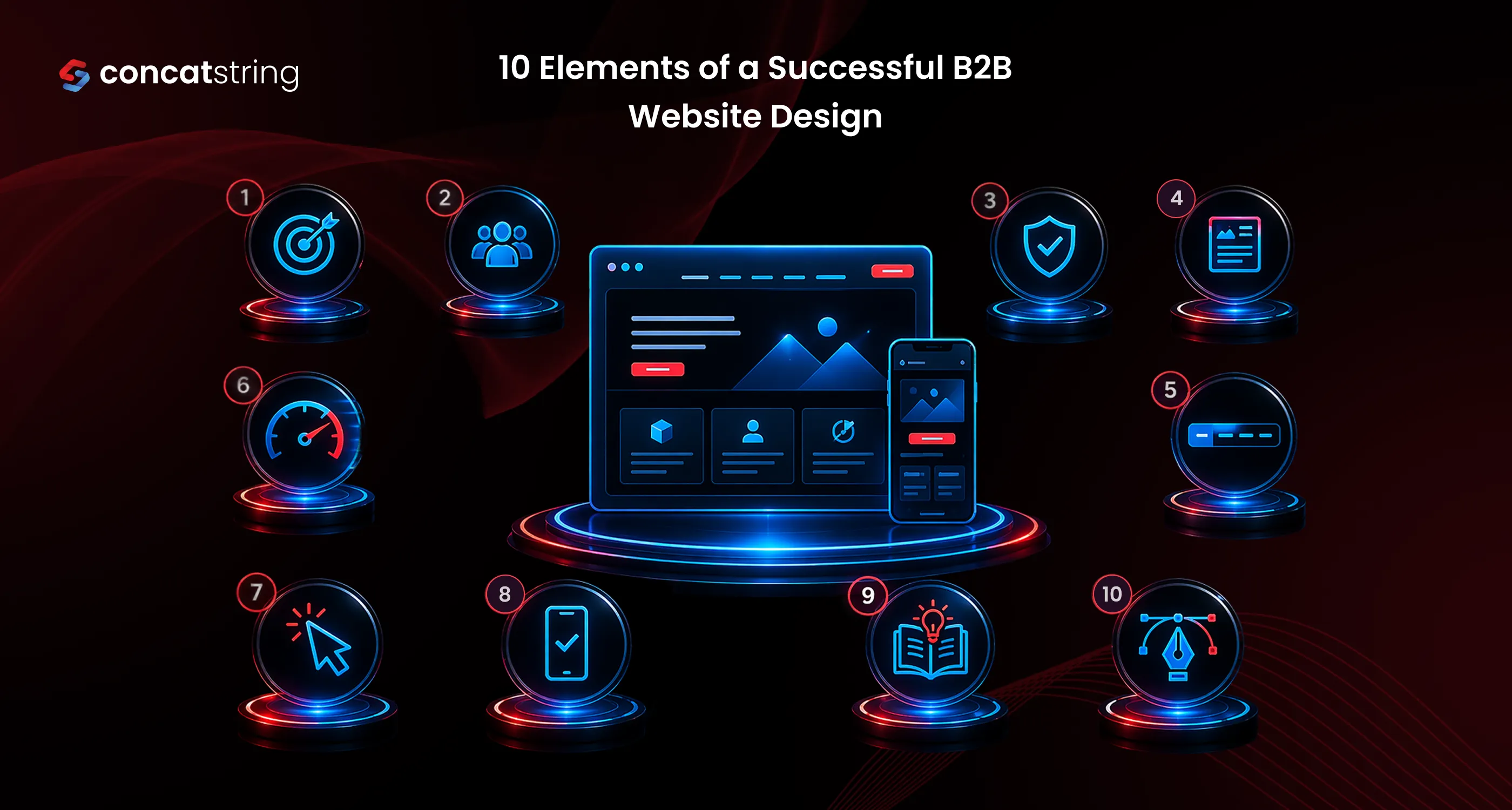
10 Elements Every Successful B2B Website Must Have
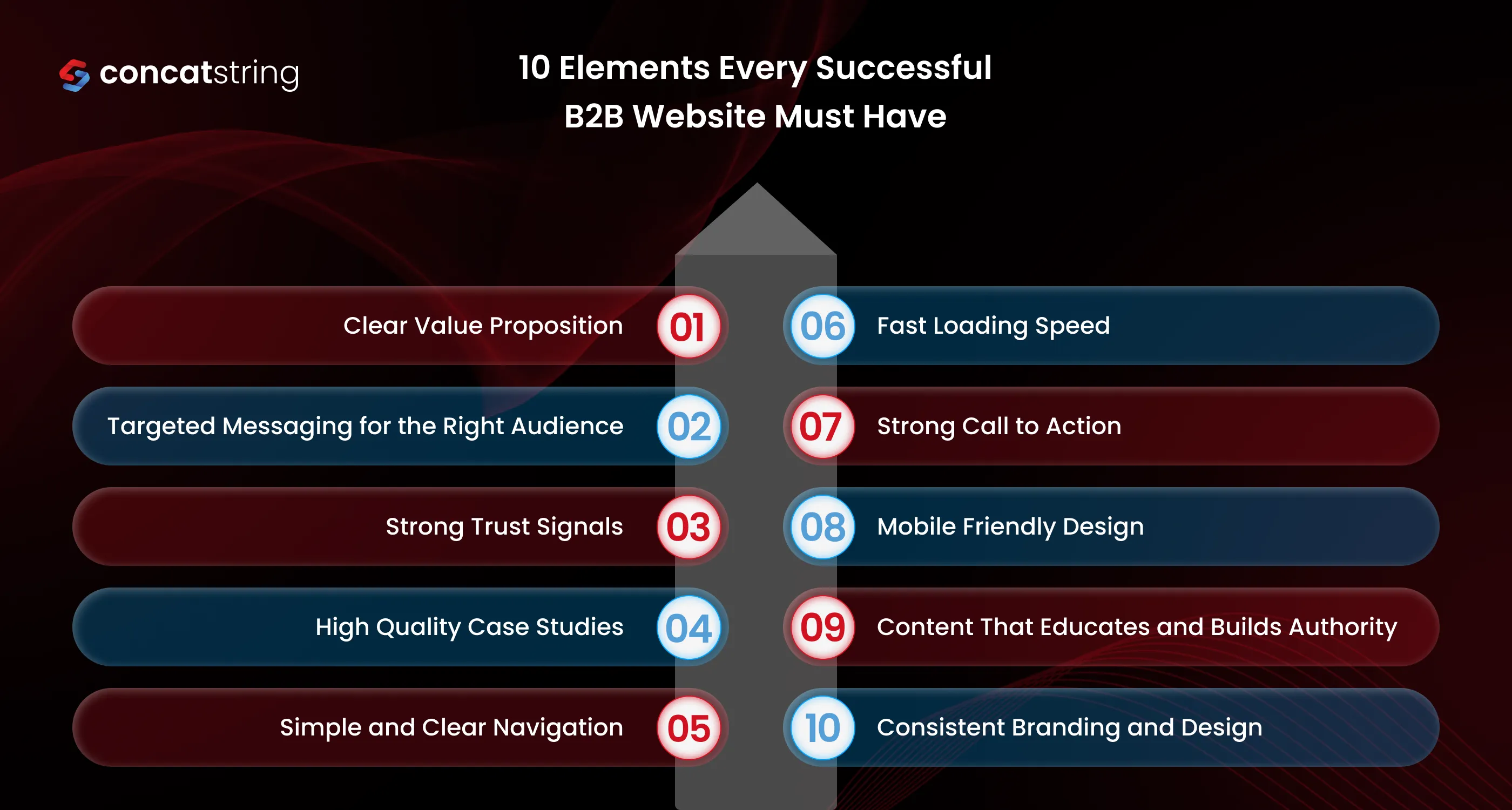
1. Clear Value Proposition
Your website should clearly tell what you do, who you do it for, and what results you deliver. This should be visible in the first few seconds when someone lands on your homepage.
If your message is unclear, users will leave quickly. A strong value proposition increases engagement and keeps visitors exploring further. It directly improves conversion because users understand why they should choose you.
2. Targeted Messaging for the Right Audience
Not every visitor is the same. Your website should speak directly to your ideal client.
For example, if you are targeting ecommerce brands, your messaging should reflect their problems and goals. When visitors feel that your website understands their needs, they stay longer and trust builds faster.
This improves conversion because the user feels that your solution is made for them.
3. Strong Trust Signals
Trust is the biggest factor in B2B decisions. Your website should include proof such as client logos, testimonials, case studies, and real results.
When a visitor sees that other businesses have already worked with you and achieved success, it reduces risk in their mind.
This directly increases conversion because trust removes hesitation.
4. High Quality Case Studies
Case studies are one of the most powerful elements in a B2B website. They show real work, real problems, and real results.
Instead of just saying what you can do, case studies prove what you have already done. This creates strong credibility.
A well written case study helps potential clients imagine similar results for their business, which increases the chances of conversion.
5. Simple and Clear Navigation
If users cannot find what they are looking for quickly, they leave. Your website should have a simple structure that guides users easily.
Pages like services, about, case studies, and contact should be easy to access.
Better navigation improves user experience and increases the chances that visitors explore more pages, which leads to higher conversions.
6. Fast Loading Speed
Speed plays a major role in user experience. If your website takes too long to load, users will leave before even seeing your content.
A fast website keeps users engaged and reduces bounce rate.
This directly impacts conversion because more users stay on your site and interact with your content.
7. Strong Call to Action
Every page on your website should guide the user toward a specific action. Whether it is booking a call, filling a form, or downloading a resource, the next step should be clear.
If you do not guide the user, they will leave without taking any action.
A strong call to action improves conversion by turning visitors into leads.
8. Mobile Friendly Design
Many decision makers browse websites on mobile devices. If your website is not optimized for mobile, you lose a large portion of potential clients.
A mobile friendly design ensures that your website looks good and works properly on all devices.
This increases conversion because users can easily interact with your website anytime and anywhere.
9. Content That Educates and Builds Authority
Your website should not only sell but also educate. Blogs, guides, and insights help position your business as an expert in your field.
When users learn something valuable from your website, they start trusting your expertise.
This builds long term credibility and increases conversion as users prefer to work with experts.
10. Consistent Branding and Design
Your website design should reflect professionalism and consistency. Colors, fonts, visuals, and layout should align with your brand identity.
A well designed website creates a strong first impression and makes your business look reliable.
This improves conversion because users feel more confident working with a brand that looks professional.
Conclusion
Every business and every industry is different. What works for one company may not work exactly the same for another. However, the elements discussed above are common foundations that every successful B2B website follows.
Your website is not just a digital asset. It is your most powerful sales tool. It decides whether your marketing efforts succeed or fail.
If you want to understand what specific changes your business needs, you can connect with ConcatString. We offer a free consultation where you can get clarity on your website, solve your doubts, and understand how to improve your conversion.
FAQs

.png)
.png)